Transitions On Your Edges What Coaches Look For
Edge transitions separate elite players from the rest. Discover the acceleration, deceleration, and directional changes that coaches watch for in game situations.
June 30, 2026
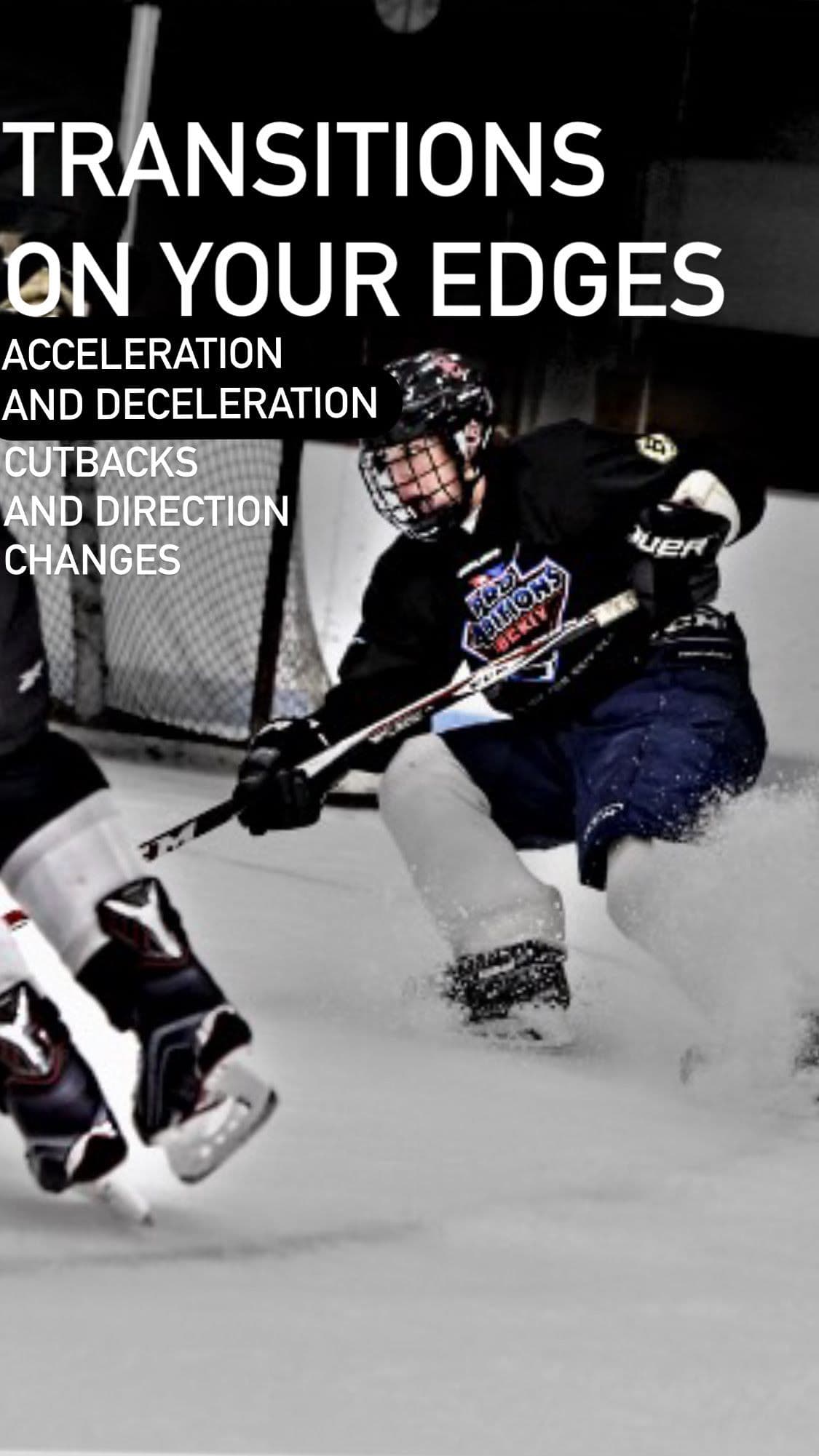
Transitions On Your Edges
What Coaches Look For
Getting faster on the ice is a goal every hockey player has. Some players were born with quicker feet than others, regardless of how hard we work at it. That part is real, and I won't pretend otherwise. But here is what I know after years of playing and coaching: all players can master quick transitions on their edges. Speed is one thing. Edge control and the ability to change direction efficiently, that is something you can train, develop, and own.
--
Key Transition Skills
Acceleration
Acceleration is your ability to go from standing still or slow movement into full speed as quickly as possible. It is not just about leg power. It is about your first two or three strides and how cleanly you push into your edges from the start. Players who accelerate well have practiced their first step so many times it becomes automatic.
Deceleration
This is the skill most youth players ignore, and it costs them. Deceleration is your ability to kill your speed under control without losing your balance or your body position. When you decelerate poorly, you give the puck away or you take yourself out of the play. Coaches notice this immediately. Learning to stop hard and stay ready is just as important as learning to go.
Lateral Movement
Lateral movement is how you move side to side without crossing your feet and losing your base. It keeps you in front of your opponent, it helps you defend, and it opens up passing and shooting lanes when you have the puck. Weak lateral movement is one of the easiest things for a coach to spot from the bench.
Change of Direction
This is where edge transitions come together. A clean change of direction means you cut from one edge to the other without stumbling, without pausing, and without telegraphing where you are going. In a real game, that moment happens in a fraction of a second. If you have not trained it until it is muscle memory, you will hesitate, and hesitation gets you caught.
--
Training These Skills
We train quick twitch muscle memory footwork extensively. These drills are hard, exhausting, and not easy, but they are essential. The reason we push players through repetition is simple: the game moves too fast to think about your feet. By the time your brain sends the signal, the moment is gone. The only way to execute clean transitions at game speed is to have done them so many times in practice that your body just does it.
Off-ice footwork training matters here too. Ladder drills, cone work, and agility exercises build the same neuromuscular patterns you need on skates. The players who put in that extra work off the ice show up to the rink with a different kind of readiness. It shows in how they move, and coaches see it.
Do not wait for game time to work on this. Practice is where you build it. Drills are where you earn it. Games are just where you show it.
--
What Coaches Evaluate
Executing changes of direction in a game is what we look for in youth players. Executing acceleration and deceleration in a game is what we look for in youth players. When I watch a player, I am not just watching them when they have the puck. I am watching how they move when they do not have it. That is where edge work really shows up.
A player who can accelerate out of a corner, decelerate into a check, and then change direction to get open is a player who controls the game. That is who we want on the ice. That is who coaches at every level are looking for. You do not have to be the fastest skater in the building to do those things well. You have to be the most prepared.
--
Frequently Asked Questions
How do I improve my edge transitions for hockey?
The best way to improve edge transitions is through repetition at slower speeds first, then building to game speed. Focus on one skill at a time: acceleration, deceleration, lateral movement, or change of direction. Off-ice agility work can reinforce the same movement patterns. Consistency over weeks and months is what actually produces results.
What do hockey coaches look for when evaluating skating ability?
Coaches are looking at more than top speed. They want to see how quickly a player accelerates from a stop, how cleanly they decelerate and stay in position, and whether they can change direction without losing their edges. A player who moves efficiently with good edge control stands out, even if they are not the fastest skater on the ice.
At what age should players start working on edge transitions?
As early as possible. Young players who develop edge awareness and footwork habits early carry those skills with them through every level of the game. There is no age that is too young to start working on balance, lateral movement, and direction changes. The earlier you build the foundation, the more you can build on top of it.
Is off-ice training useful for improving on-ice edge work?
Yes, and players who skip it are leaving improvement on the table. Ladder drills, cone agility work, and quick-feet exercises train the same fast-twitch muscle patterns you use on skates. You are teaching your body how to move quickly and stay balanced under pressure. That transfers directly to the ice when you put your skates on.
Apply It On The Ice
Ready to Put This Into Practice?
Pro Ambitions runs the largest youth hockey camp in North America. Train with coaches who wrote articles like this one.