The High Cycle
Discover the high cycle drill—a fundamental offensive play that separates elite hockey players from the rest. Learn how forwards and defensemen coordinate to create scoring opportunities.
June 30, 2026
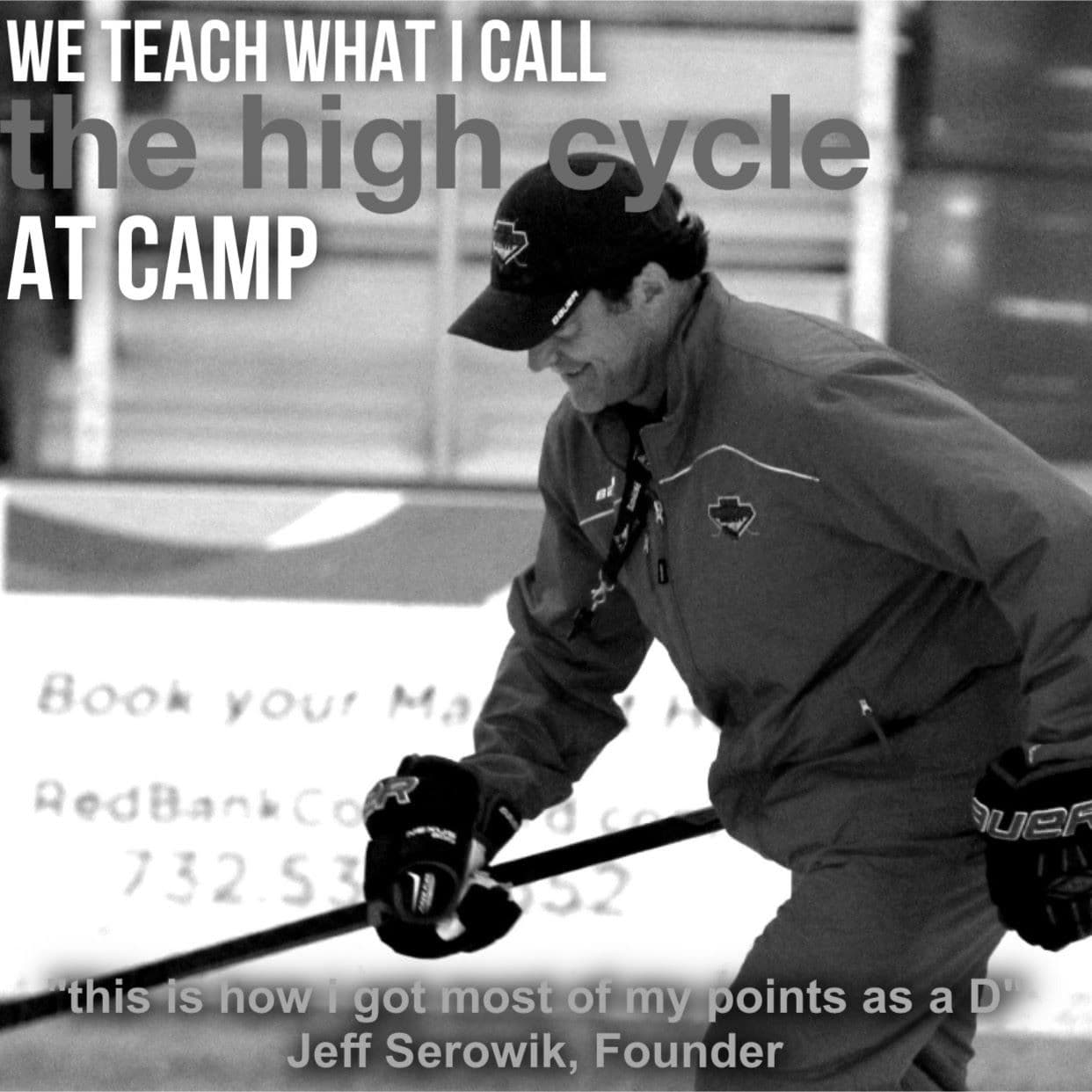
What the High Cycle Is
A basic low cycle drill has three forwards circling around in scoring position in the offensive zone. The high cycle is different. It is a drop back to the defenseman in the offensive zone, pulling the play up high and creating a new angle of attack. One forward, one D, and a read that has to happen fast.
This play needs to be in your toolbox. Forwards need to know the D are an option on offense, not just a safety valve when things break down. Too many young players are conditioned to think the play only exists below the dots. That is a limited way to see the ice.
Why We Teach This Play at Every Level
We ingrain the high cycle into campers from Squirt on up. The same play exists at the NHL level. The concept does not change, only the speed and the precision of execution. That is why we start teaching it early. You do not want a fifteen-year-old learning this for the first time when he should already own it.
Torey Krug of the Boston Bruins makes this play look like poetry in motion. Watching him work the high cycle shows you what it looks like when a defenseman and a forward are truly connected. That connection is not accidental. It is built through repetition and trust developed over time on the ice together.
There are offensive defensemen on every team at every level. Forwards who recognize that and use it are harder to defend. Forwards who ignore it are leaving a weapon on the bench.
How the Fake and Deke Connects to This Play
The fake and deke works beautifully inside the high cycle. When a forward drives wide and sells the move before dropping back to the D, the defender has to respect both options. That hesitation is the whole point. It creates just enough separation for the D to get a shot off or walk into a better lane.
These skills are all part of the same curriculum. They are broken down, taught, and mastered in sequence. One skill builds on the next. When players understand how the pieces connect, they stop thinking in isolated moves and start reading the play as a whole.
What We Look For When Evaluating Players
It is obvious to me when evaluating players for tryouts or recruiting who owns this play and who is breaking it. A player who executes the high cycle correctly is showing me hockey sense, not just skill. He is showing me that he has been coached well and that he has put in the work to internalize it.
I see players at my camps whipping hard passes and others not yet ready to receive them. That breaks the play. It is not a character flaw, it is a development gap, and we address it directly. We take care in matching players with equally skilled campers so the play actually has a chance to work and both players can learn from the execution.
Everyone Gets There on Their Own Timeline
Everyone will get there, but not at the same time, and not necessarily to the same level. That is okay. As players master these skills they will be placed on higher level teams where teammates are equally skilled, and the plays will hold together more consistently than they do at younger ages.
We are there to help without biased eyes. No agenda, no favoritism. Just an honest read of where a player is and what he needs to move forward. That is the job.
All of these plays and skills must be taught, broken down, explained, trained, practiced, and repeated in order to execute properly in a game situation. There are no shortcuts. The players who put in that work are the ones you see making the play look effortless come game time.
Frequently Asked Questions
What is the difference between a low cycle and a high cycle in hockey?
A low cycle keeps the puck moving below the dots in the offensive zone, with forwards working in tight to the net. The high cycle pulls the play back up to the defenseman at the blue line, creating a different angle and a new threat. Both are legitimate offensive weapons, but the high cycle is often undertaught at the youth level.
When should a young player start learning the high cycle?
We start teaching it at the Squirt level. The concept is simple enough to introduce early, and getting comfortable with it young means a player is not learning it from scratch when the game speeds up. The earlier you build the habit of looking to the D as an offensive option, the more natural it becomes.
How do forwards and defensemen build chemistry on this play?
Repetition in practice is the answer. The forward has to trust the D will be in position. The D has to trust the forward will make a clean drop. That trust is not built by talking about it, it is built by running the play over and over until both players know exactly what to expect from each other. Camp environments where players work together consistently are a great place to develop that chemistry.
How can I tell if my child is executing the high cycle correctly?
Watch whether the puck moves cleanly and whether the D has time and space to make a play after receiving it. If the pass is late, rushed, or off target, the read or the timing is off. A well-executed high cycle looks smooth because both players made the right decision at the right moment. When it breaks down, it usually means one player is a step behind mentally, not physically.
Apply It On The Ice
Ready to Put This Into Practice?
Pro Ambitions runs the largest youth hockey camp in North America. Train with coaches who wrote articles like this one.