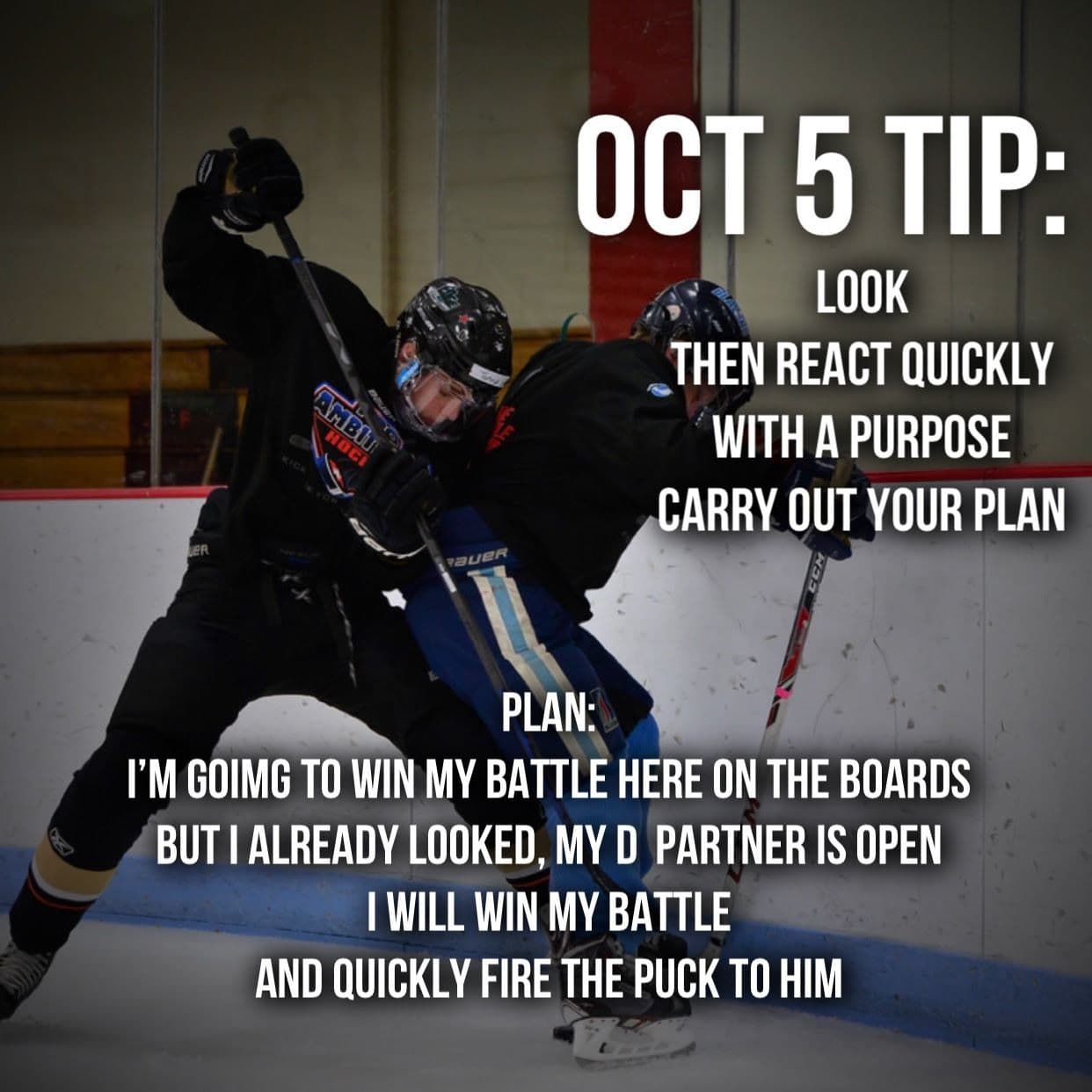
Look Then React Quickly With A Purpose
Train yourself to be one look ahead of the play by planning your moves before you get the puck. This mindset transforms how youth hockey players make quick decisions and execute plays with purpose.
June 30, 2026
Train Your Brain Before You Touch the Puck
Train yourself to be one look ahead of the play. That is the mindset that separates good players from great ones. It sounds simple, but most youth players never work on it because they are too focused on chasing the puck.
Plan what you are going to do with the puck before you get it. As you watch the play developing, look around. Look ahead of you. The players who do this consistently are the ones who make the game look easy, and it is not luck. It is preparation.
Why Most Youth Players Struggle With This
Most youth players are so focused on the puck, getting the puck, that when they finally get it they have no idea what to do with it. They haven't looked up. They haven't scanned. So they lose it, turn it over, or take a hit they never saw coming.
That is a decision-making problem, not a skill problem. A player can have great hands and still be ineffective if their mind is always a step behind the play. The puck moves fast. The game moves fast. If you wait until the puck is on your stick to start thinking, you are already late.
Make Your Decision Before You Get the Puck
Decide what you are going to do with the puck when you get it. Then go after it, get it, and quickly carry out that plan. This is not a complicated concept, but it takes real discipline to build the habit.
The decision changes sometimes, yes. A player cuts, a lane closes, your teammate falls down. You adjust. But starting with a plan puts you in control of the play instead of reacting to chaos. A player with a plan and a read is almost always a step ahead of a player who is just chasing.
Get into this mindset now. Not when you get older. Not when the game gets faster. Now, while the habits are forming.
A Specific Example for Defensemen
If you are a defenseman, here is exactly what I mean. Take a glance beside you. Is your D partner open? Now glance up the ice. Is your winger open? Make the decision about what you are going to do with the puck before you go get it. Then go after it, get it, and fire it off quickly.
That whole process should take a second or two before you touch the puck. That pre-read is what allows you to move the puck fast and clean when you do get it. Defensemen who skip this step are the ones who get caught holding the puck too long, and that is when bad things happen in your own zone.
The same principle applies to forwards. Before you go into a corner battle, know where you are going to put the puck if you come out with it. Give yourself an exit before you even enter the situation.
Build This Habit Early
I want youth players to get into this mindset now. Training yourself to do this early will make you a better player. And better. And better. The players who develop this habit young carry it with them through every level of the game.
The game is fast and decision making changes, of course. But the players who have trained their eyes and their brain to work ahead of the puck are the ones who can keep up as the speed increases. You are not going to out-skate the game at every level. At some point you have to out-think it.
Go after the puck with a purpose. Make your decision in advance. Then execute.
--
Frequently Asked Questions
How do I train myself to look up and read the play before I get the puck?
Start in practice. Every time you are away from the puck, make yourself scan the ice. Look at where your teammates are, where the opposing players are, and where the open ice is. Do this repeatedly until it becomes automatic. You will not be perfect at it right away, but the repetition is what builds the habit. Over time your eyes will start doing it without you thinking about it.
Is this skill only for advanced or older players?
No, and that is exactly the point. The younger you start building this habit, the better. Young players who train their brain to work ahead of the puck develop a feel for the game that takes other players years to catch up to. You do not need to be playing at a high level to start thinking this way. You just need to be willing to focus on it.
What if the play changes and my original plan doesn't work anymore?
That is part of the game, and it is fine. Having a plan does not mean you are locked into it. It means you are starting with a read instead of starting blind. When the play changes, you adjust and you are still ahead of a player who never had a plan to begin with. The goal is to have your brain engaged before the puck arrives, not to predict the future perfectly.
How does this apply to a player who is not a natural passer or playmaker?
It applies just as much. Even if your plan is to skate hard into open ice, carry the puck up the wall, or shoot on net, that is still a decision made in advance. This is not just about passing. It is about going after the puck with a purpose and knowing what you intend to do the moment you get it. Every position and every style of player benefits from thinking ahead.
Apply It On The Ice
Ready to Put This Into Practice?
Pro Ambitions runs the largest youth hockey camp in North America. Train with coaches who wrote articles like this one.