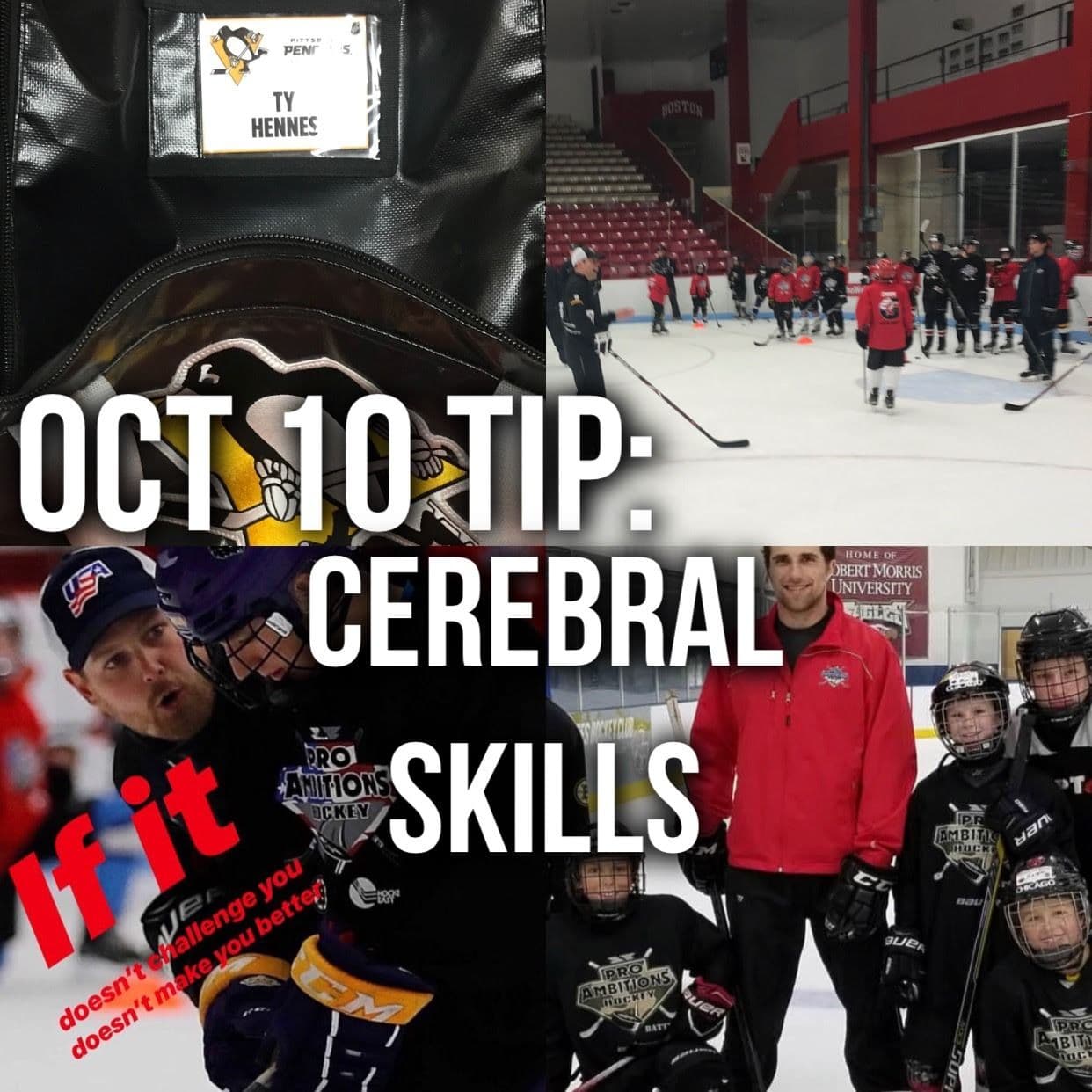
Cerebral Skills
A players never miss skills training—and it shows. Discover why consistent, expert-led skill development is essential for advancing in competitive hockey.
June 30, 2026
Stop Missing Skills Sessions
Do not miss skills. I will say it plainly because it matters more than most players and parents realize. The players who show up consistently are the ones who improve. The players who show up whenever it is convenient are the ones who wonder why they are not moving up.
We run skills sessions for many youth organizations around Boston. The president of one of those organizations emailed us not long ago with something worth hearing. He said the A players never miss skills, and they are improving significantly. Some B and C players come sporadically and then wonder why they are not advancing. The answer is simple. Their skills are not improving because they are not putting in the time. Commitment is not something you do when it is easy. It is something you do when it is hard, when you are tired, and when you would rather be somewhere else.
Why Skill Training Requires Real Experts
You must train with professional skill coaches who know how to break down each skill and teach it properly. This is not optional if you want to get better. There is a difference between someone who has played the game and someone who can actually teach it. A good skill coach sees the mechanics, identifies the flaw, and fixes it before it becomes a habit that holds you back for years.
I hire experts to train my daughter in field hockey because I am not an expert in that sport. She learned a very specific shot in a private lesson, shooting off her right foot to protect the ball from a defender. That is not something you figure out on your own in a pickup game. It takes a trained eye and a structured lesson. Hockey is no different.
We are the experts here. Not a mom or dad coach who means well but has never trained at a high level. That is not a knock on hockey parents. It is just the truth. You would not go to a general practitioner for heart surgery. Get your players to the right people.
The Game Is Cerebral
The game today is cerebral. It is not just skating fast and shooting hard. Players who reach the highest levels understand why they are doing what they are doing. They process the play before it develops. They make decisions in fractions of a second because they have trained their minds along with their bodies.
We are going to teach you how to react to a puck that bounces off the boards in 15 different ways. That is not an accident or a drill we made up. That is preparation for what actually happens in a game. When you have practiced a skill enough times with proper instruction, your brain stops hesitating and starts reacting. That is the edge.
We break down the skills necessary to be successful in the game. Every drill has a reason. Every repetition builds a response. When players understand why they are doing something, not just how, they retain it and they apply it. That is the difference between going through the motions and actually getting better.
Pros Never Stop Training
Pros train with skill coaches too. They do not stop just because they made it. The best players in the world continue to work on their craft because they understand that the moment you stop refining your skills, someone else is passing you. That mindset starts now, not when you get drafted.
The advantage in today's youth hockey environment is that kids are learning proper technique from the very beginning. Skill sessions and camps give young players access to coaching that did not exist the same way a generation ago. The players coming up now have real tools available to them. The question is whether they show up to use them.
If you are serious about improving, train consistently with coaches who know the game at a high level. Understand what you are being taught and why. Do not miss sessions. That is the formula. It is not complicated, but it does require commitment.
--
Frequently Asked Questions
How often should a youth hockey player attend skills sessions?
As often as possible within your schedule. Once a week is a baseline, but the players who improve fastest are getting on the ice for skills multiple times a week. Sporadic attendance produces sporadic results. The skill has to be repeated correctly over time before it becomes instinct in a game situation.
What is the difference between a skills session and regular practice?
Regular team practice focuses on systems, positioning, and playing as a unit. A skills session is focused specifically on individual technique, skating mechanics, puck handling, shooting form, and decision-making. Both matter, but skills sessions give players dedicated time to fix and build the fundamentals that everything else is built on. Players who skip skills and only do team practice are leaving development on the table.
My child is a B or C player. Will skills sessions actually help them move up?
Yes, but only if they attend consistently. Sporadic attendance is one of the most common reasons players at those levels plateau. The A players are not necessarily more talented. In many cases they are simply more committed to the process. Show up every week, focus on what the coaches are teaching, and the improvement will come.
How do I know if a skills coach is actually qualified to teach my child?
Look at their background at the playing level and their experience working specifically with youth players at multiple skill levels. A coach who played at a high level and has built a structured curriculum for skill development is what you want. Ask what they are teaching and why. A qualified coach should be able to explain the purpose behind every drill they run. If they cannot, find someone else.
Apply It On The Ice
Ready to Put This Into Practice?
Pro Ambitions runs the largest youth hockey camp in North America. Train with coaches who wrote articles like this one.