Activating the D in Offense
Discover how Pro Ambitions trains defensemen to become offensive threats. Learn the mindset shift that turns your D into playmakers from the blue line.
June 30, 2026
The Offensive Opportunity Defensemen Are Missing
In youth hockey, defensemen have a huge offensive opportunity that most teams leave on the table. When you have a defenseman who can skate and handle the puck, you want that player involved in the offense. The problem is, most young D-men either hang back too far or charge in at the wrong time. Learning the difference is what separates a good offensive defenseman from a great one.
The key is reading the play. Quick transitions and quick assessments of what's happening in front of you are where defensemen need to identify and jump into scoring opportunities. If you're waiting to see how the play unfolds before you decide to join, you're already too late.
The Defenseman's Role: Think "Mr. Assist"
Here's the mindset shift every defenseman needs to make. When you're shooting from the point, your job is NOT NECESSARILY TO SCORE but to get the puck into the scoring area so that THE FORWARDS can score. That's the whole job. Understand it, own it.
Defensemen are seldom shooting to score. Think of yourself as "Mr. Assist." Your job from the blue line is to create chaos in front of the net, put the puck on net low and not too hard, and let your forwards do the dirty work on the rebounds and tip-ins. A puck that stays in the scoring area is worth more than a hard shot that misses the net and leads to a breakout the other way.
Forwards, this means you need to be ready. Get to the net, position yourself for tip-ins, and trust that your D is going to put that puck in a place where you can finish. This only works when both units understand their assignments.
Positioning: How to Stagger the D in the Offensive Zone
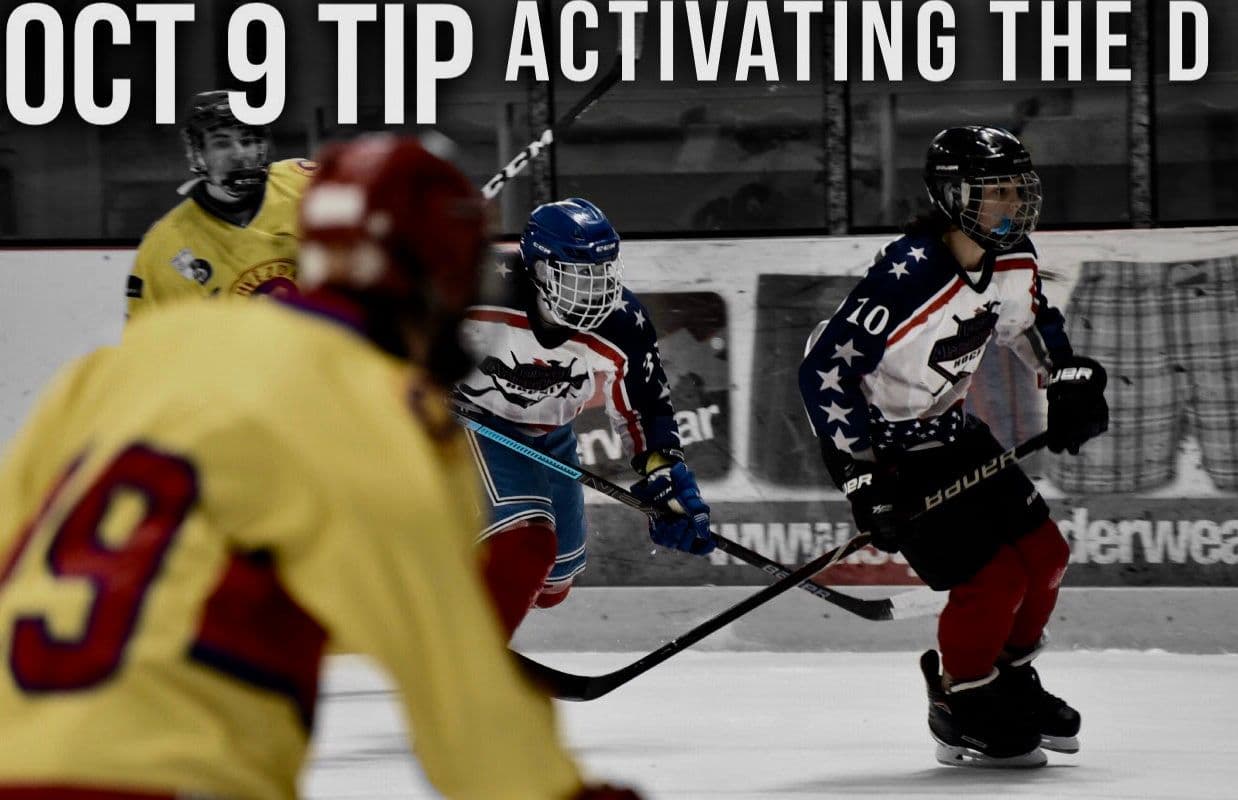
When you have a 2-on-2 or 3-on-2 situation developing, stagger one of your defensemen up a little farther into the offensive zone. This creates an extra option for your forwards and keeps the defense honest. If the opposing defensemen have to account for your D crashing the zone, that opens up lanes for your forwards driving the net.
The defenseman moving up needs to read the ice before he commits. If the puck turns over, you need one D back to protect against the rush. Both defensemen cannot be at the top of the circles at the same time. One stays, one goes. That discipline is what keeps your offense from becoming a liability.
Timing is everything here. The right jump at the right moment creates a numbers advantage. The wrong jump at the wrong moment puts your team on the wrong end of a 2-on-1.
When a Defenseman Joins the Rush
When you have a defenseman joining the rush, you automatically have an open teammate somewhere on the ice. The opposing team's defense is built to match up against your forwards. Add a third attacker in the form of your D-man, and someone is open. The forward who brought the puck into the zone needs to recognize that and make the right read.
This is where practice reps matter. These situations need to be run over and over until every player on the ice knows where to go without thinking. You can't hesitate in a game when the opportunity opens up. The read has to be automatic.
Working Both Ways: Forwards Need to Understand the D
We encourage forwards to understand how defensemen are being trained, and defensemen need to understand the forward's perspective as well. This is a two-way street. When forwards know that their D is trained to shoot low for tips and rebounds, they position themselves differently. When D-men understand where forwards are going to be, their shots become smarter.
Too many youth teams practice these concepts in isolation. The forwards drill one thing and the defensemen drill another, and then they're expected to connect on the ice without ever having worked through it together. That's backwards. Put them in situations together in practice where they have to communicate, read each other, and execute as a unit.
Working on Your Game at Home
Offensive defensemen, here's your homework. Work on your hands, your passing, and your shooting every chance you get. Off-ice stickhandling, shooting at a net in the driveway, passing off a rebounder, all of it adds up. The more comfortable you are with the puck, the faster your reads become in game situations.
The skills that make a good offensive D-man are learnable. They are not reserved for the players who were born with them. Put in the reps and the game slows down for you.
Frequently Asked Questions
When should a defenseman jump into the offensive zone?
A defenseman should join the rush or move deeper into the offensive zone when there is a clear numbers advantage, like a 2-on-2 or 3-on-2 situation, and when the play is moving toward the offensive end with control. The timing has to be right. If there's any chance of a quick turnover, one D needs to stay back. The read comes from practice and repetition, not instinct alone.
Should a defenseman try to score from the point?
Not usually. The primary job of a defenseman shooting from the point is to get the puck on net low so it stays in the scoring area for forwards to tip or rebound. A hard shot that misses the net or gets blocked and leads to a rush the other way does more harm than good. Think "Mr. Assist" first.
How do forwards and defensemen learn to work together offensively?
They need to practice together in the same drills, not separately. Forwards need to understand where the D is trained to put the puck, and defensemen need to know where forwards will be positioned. When both groups are working from the same playbook, the reads become automatic and the execution improves.
Is offensive play something a young defenseman can develop, or is it a natural skill?
It is absolutely something you can develop. Skating, puck handling, passing, and reading the ice are all learnable skills. Young defensemen who put in work on their hands and spend time understanding offensive positioning will see results. The players who commit to working on it outside of practice are the ones who stand out.
Apply It On The Ice
Ready to Put This Into Practice?
Pro Ambitions runs the largest youth hockey camp in North America. Train with coaches who wrote articles like this one.