What Is Your Coach’s Hockey Philosophy?
Every coach brings a unique hockey philosophy to their team. Jeff Serowik shares how understanding your coach's style—from defensive foundations to offensive strategies—directly impacts your player's development and success on the ice.
June 30, 2026
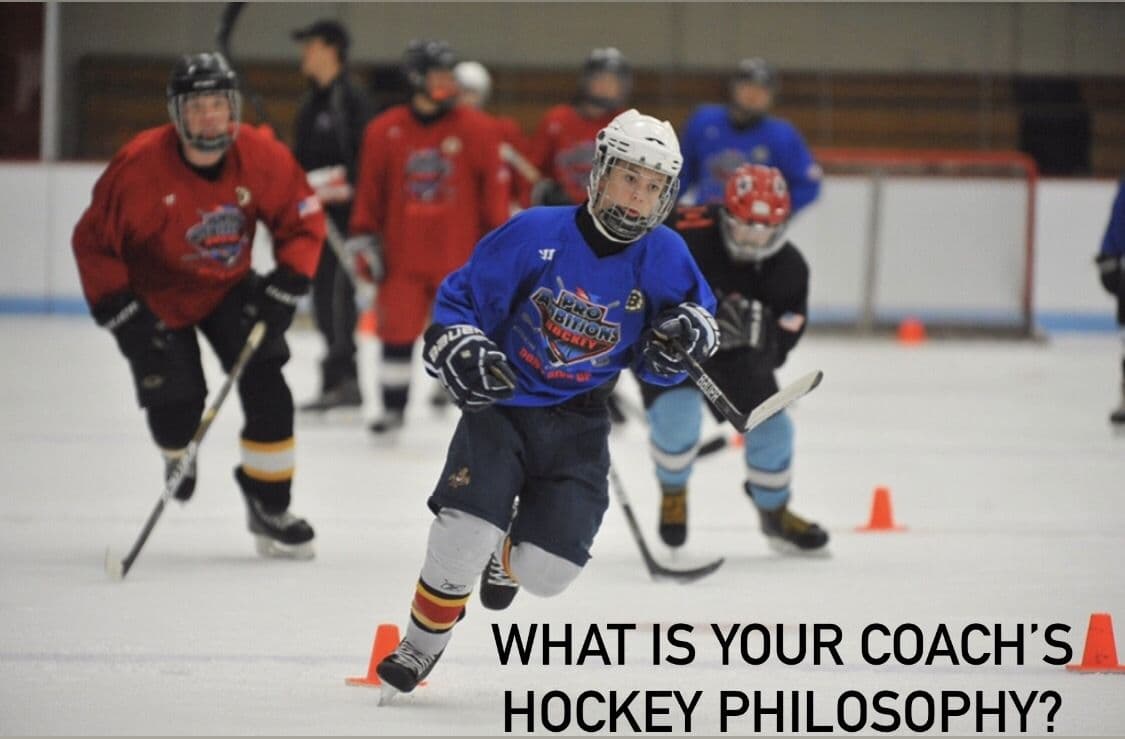
What Is Your Hockey Coach's Philosophy?
Every coach has a different style and hockey philosophy which will dictate how the team trains and plays. In my tenure of hockey I have had the pleasure to learn from a great number of incredible hockey tacticians and mentors. I believe there is something new to be learned from every coach. The coaches who shaped me didn't all share the same system, but they shared the same discipline: know what you believe, and teach it with conviction.
After retiring, and beginning my journey to develop youth players, I sat down to think long and hard about my own hockey philosophy and style of play. I was an offensive defenseman and I value GETTING INTO THE OFFENSE as many coaches do. Although I am a defenseman and believe that "Defense can win Championships," I like to train kids to get into the offensive zone and stay there. Pressure creates turnovers. Turnovers create chances. That chain starts with how you move without the puck.
Articulate Your Philosophy to Your Team
As youth coaches it is a good exercise to think about your hockey philosophy and articulate it to your team so that the kids have a clear direction of how you will be training and what you expect and want from them. Kids cannot execute a system they do not understand. Be direct with them. Tell them exactly what you want and why.
Although video and chalk talk are essential training tools, nothing replaces on ice instruction, practice, making mistakes, learning from them, repetition and reinforcement, most especially when training youth hockey players. You can draw the perfect breakout on a whiteboard and a kid will still blow the first ten reps on the ice. That is not failure. That is the process. Parents need to be patient with their children as hockey takes years of practice before mastery of skills.
Training Without the Puck
We train kids on what they should be doing without the puck in order to have more time with the puck. This is one of the most undercoached concepts at the youth level. Most kids only think about the puck. The elite players are always thinking one or two moves ahead, positioning themselves before they ever receive a pass.
This includes individual strategies to get into the offense:
- ▸A five-player pounding attack after the breakout, aggressively skating up as a unit
- A Defenseman beating a Forward up to the neutral zone, with that Forward making an adjustment to cover the Defenseman
There are obvious offensive plays such as Two on Ones, Three on Twos, and Power Play strategies. Then there are less obvious scenarios to teach and train the kids. Those less obvious situations are where games are actually won and lost. Any team can run a power play. Not every team knows what to do when the play breaks down and there is no clear structure in front of them.
Teaching Five-Person Unit Play
What do kids do when there is no plan during the game? Outside of the set plays listed above?
NHL teams and youth hockey teams are training as a five-person unit where Forwards cycle back to cover the D if needed. Every player on the ice has a responsibility, whether they are near the puck or nowhere close to it. When one player jumps into the attack, someone else has to rotate and fill. That is not optional. That is the system.
Circling as a five-person unit, I love this style of play. It keeps pressure on the defense, it keeps your team connected, and it creates the kind of sustained zone time that wears opponents down over the course of a game. This is my philosophy: Getting into the offense and staying there as a unit.
Building the Right Habits Early
The reason I focus on this with youth players specifically is that habits formed early are extremely hard to break later. If a kid spends three years watching the puck instead of moving to support it, that becomes instinct. You are not just teaching systems. You are rewiring how a young player sees the game. That takes patience, consistency, and a coach who knows exactly what they are trying to build.
Frequently Asked Questions
Why does a coach's hockey philosophy matter for youth players?
A coach's philosophy shapes every decision made on the ice, from how practices are structured to how players are positioned in games. Without a clear philosophy, you get inconsistent instruction and confused kids. Young players develop faster when they understand the system they are being trained in and can work toward mastering it deliberately.
How do I know if my child's coach has a real development philosophy?
Ask directly. A good coach should be able to tell you in plain terms what they are trying to build and why. If the answer is vague or shifts from week to week, that is worth paying attention to. Look at practice structure too. Are kids getting repetitions of the same concepts, or does it feel random? Repetition and reinforcement are the signs of a coach who knows what they believe.
What does "playing without the puck" mean and why does it matter?
Most of the game is spent without the puck. How a player moves, positions, and communicates during those moments determines whether they are open to receive it or invisible to their teammates. Training off-puck habits is what separates players who look good in drills from players who actually impact games.
At what age should coaches start teaching team systems and unit play?
You can start introducing simple unit concepts earlier than most coaches think. Kids are capable of understanding positional responsibility when it is taught clearly and reinforced consistently. Start simple, keep it physical, and build the concepts layer by layer over multiple seasons. Do not wait until players are older to expect them to think like a team.
Apply It On The Ice
Ready to Put This Into Practice?
Pro Ambitions runs the largest youth hockey camp in North America. Train with coaches who wrote articles like this one.