The Path To Success
The path to hockey success is filled with ups and downs, but the players who commit to training and push through the hard moments will get there. Learn why persistence matters more than talent.
June 30, 2026
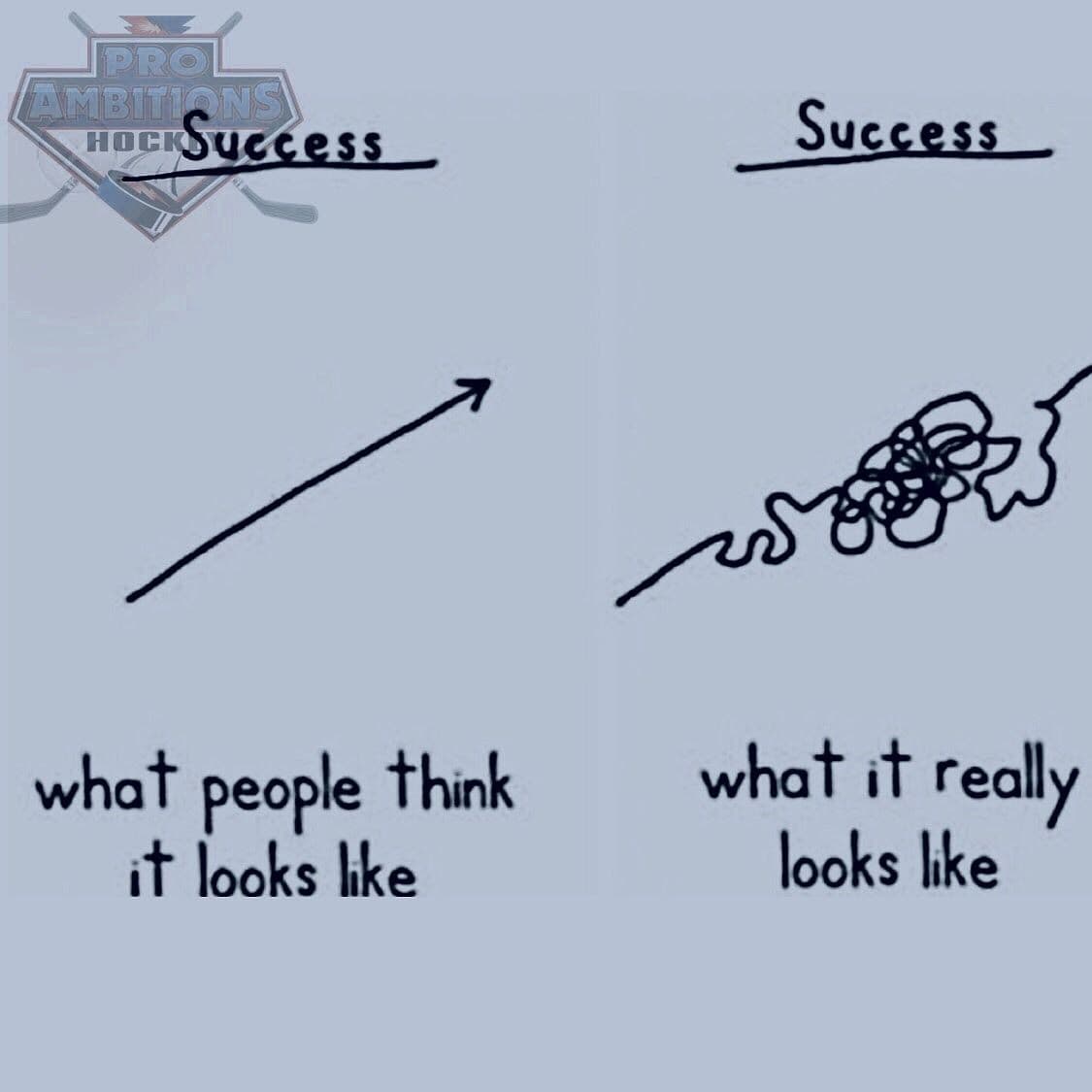
The Path To Success Is Not Straight
The path to success is not straight. For anyone. Even if it appears that way from the outside. What you see when you look at a player who made it is the finish line. You don't see the wrong turns, the setbacks, the years of grinding through doubt. Nobody shows you that part.
That's the part that actually matters.
Every Player's Journey Looks Different
The hockey path has a lot of squiggles. And circling back. Some kids commit to a program at twelve and find their stride early. Others bounce around, get cut, switch positions, change teams, and figure it out at seventeen. Both paths can get you to the same place. Stop comparing your timeline to someone else's.
What I've seen coaching players at every level is that the ones who keep moving forward, even sideways, even backward sometimes, are the ones who eventually break through. Forward progress doesn't always look like forward progress while it's happening.
The Work Always Adds Up
Training matters. Every rep, every early morning, every extra session you put in when nobody is watching goes somewhere. It doesn't evaporate. The kids who put the time in will get there. It all adds up.
Think of it like a bank account. Every practice, every film session, every summer workout is a deposit. You may not see the return right away. But you're building something real inside you. Every hockey experience is now in you. Your reads, your compete level, your ability to handle pressure in big moments, that all comes from the accumulation of work you've already done. You can't shortcut it and you can't fake it.
Most People Quit
Most people give up. Because it is too damn hard. That's the honest truth and I'm not going to soften it for you. The process of becoming a real hockey player asks a lot of you. It asks a lot of your family. There are costs, sacrifices, early mornings, late nights, and moments where you seriously question whether it's worth it.
A lot of players walk away right before something was about to click. They didn't know how close they were. Nobody does in the middle of it.
Don't Quit
Don't. That's the whole message. Stay in it.
When it gets hard, and it will get hard, that's exactly when most players fold. If you can push through that moment while others are walking out the door, you are already separating yourself from the pack. Not because you're more talented. Because you're still there.
The players I've worked with who went the furthest weren't always the most gifted kids in the room. They were the ones who refused to let a bad season, a bad coach, a bad year define where their career ended. They kept showing up. That habit of showing up is worth more than almost anything else you can develop.
--
Frequently Asked Questions
How long does it take to develop as a hockey player?
There is no set timeline. Some players develop early and some develop late. What matters more than the timeline is whether you're consistently putting in quality work and staying in the process. I've seen players who looked like nothing special at fifteen become legitimate prospects by eighteen or nineteen because they refused to give up and kept grinding. Development is not linear, and anyone who tells you it is hasn't been around the game long enough.
What should I do if my child gets cut from a team?
First, don't panic. Getting cut is painful but it is not the end of the road. Use it as information, not as a verdict. Find out where the gaps are, address them in practice and training, and come back better. Some of the most motivated players I've coached had a bad cut somewhere in their history that lit a fire in them. The players who respond to adversity by working harder are the ones who make coaches take notice down the road.
Is it too late to start taking hockey seriously at 14 or 15?
It depends on what your goals are. If you want to play at a high level and you're fourteen or fifteen, you are not finished. You have to be honest about where you are right now and what you need to fix, and then you have to commit fully to that process. Late developers exist at every level of this sport. Work ethic, hockey sense, and compete level can close a lot of gaps that age and late starts create. Stop asking if it's too late and start asking what you need to do today.
How do I stay motivated when the progress feels slow?
Focus on the process, not the outcome. When you're in the middle of development, it can feel like nothing is changing. It is changing. You just can't always see it from inside it. Keep a record of where you started. Look back every few months at what you couldn't do before that you can do now. Trust the work. The players who lose motivation usually do so because they're watching the scoreboard instead of playing the game in front of them. Put your head down, do the work, and let the results follow.
Apply It On The Ice
Ready to Put This Into Practice?
Pro Ambitions runs the largest youth hockey camp in North America. Train with coaches who wrote articles like this one.