TAKES NO TALENT
Elite hockey isn't just about talent—it's about attitude, work ethic, and coachability. Learn the intangibles that separate good players from great ones.
June 30, 2026
None of This Requires Talent
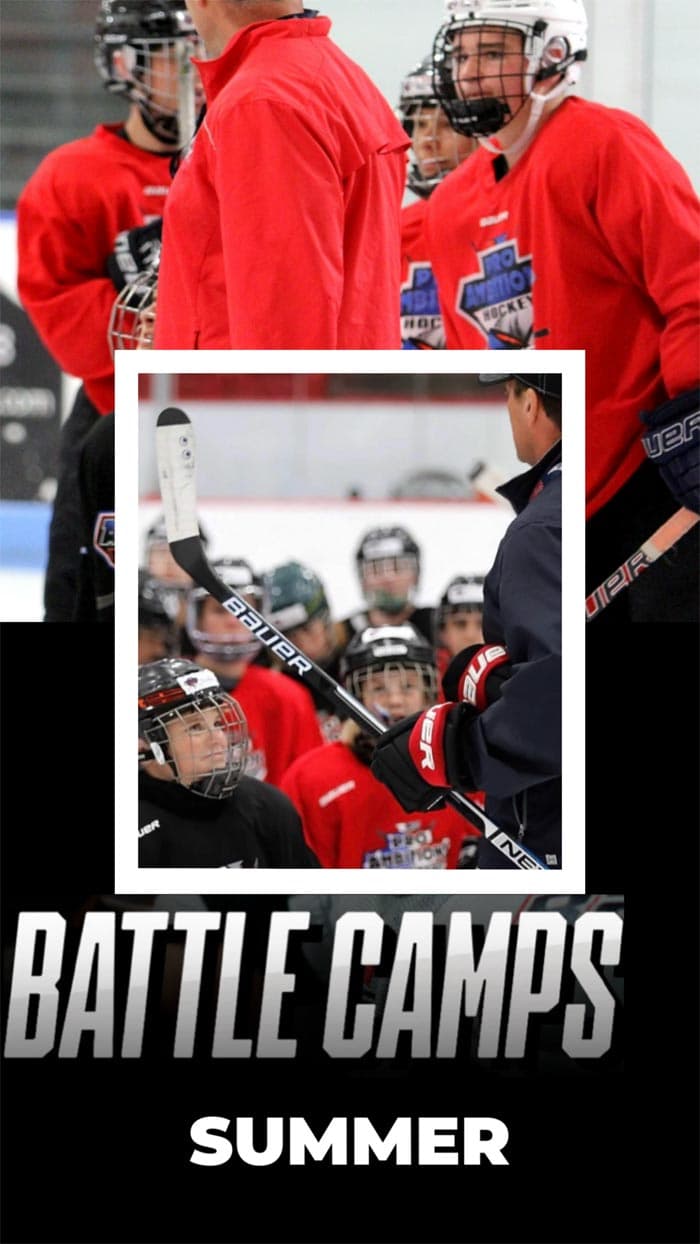
Every coach in every locker room at every level has heard some version of the same excuse. "I'm not fast enough." "I'm not big enough." "I'm not skilled enough yet." Here is what I know after playing in the NHL and coaching thousands of kids through Pro Ambitions: most of what separates good players from great ones has nothing to do with talent. It never did. The list below is proof.
--
Your Mindset and Attitude
Attitude
Your attitude is a choice you make before you ever step on the ice. A bad attitude poisons a locker room and it limits your own ceiling. Coaches at every level are watching this first.
Grit and Not Giving Up
Grit is not something you are born with. It is built rep by rep, shift by shift. When things get hard, and they will, the players who push through are the ones who earn more ice time and more trust from their coaches.
Understanding Setbacks Lead to the Major Wins
Every tough stretch teaches you something a good stretch cannot. Learn to see the hard moments as information, not punishment. The players who reset fast after a bad game are always the ones who improve fastest.
Resetting Each Day
You cannot carry yesterday's bad game into today's practice. Flush it. Show up fresh. That reset is a skill, and you need to work on it just like you work on your shot.
--
Your Body and Preparation
Rest and Sleep
Sleep is when your body repairs itself. If you are cutting corners on sleep to scroll your phone, you are undercutting every rep you put in at practice. Serious players protect their sleep like it is part of training, because it is.
Hydration
You cannot perform at your best dehydrated. Drink water throughout the day, not just during games. By the time you feel thirsty, you are already behind.
Food Is Fueling You
You are burning an enormous number of calories on the ice. What you put in your body before and after practice matters. Junk food is not a reward. It is a setback in disguise.
Airing Out Your Equipment
This one is simple and players ignore it constantly. Air out your gear after every skate. It reduces bacteria, it extends the life of your equipment, and honestly, your teammates will thank you.
--
Your Work Ethic and Daily Habits
Work Ethic
Hard work is not complicated. It is showing up when you do not feel like it. It is taking the extra shift, finishing the drill with detail, and not watching the clock. No one ever made it to the next level by doing the minimum.
Being on Time
Being on time means you are early. When you are late, you are telling your coaches and teammates that your time matters more than theirs. That reputation sticks.
Making a Plan and a List
Write down your responsibilities on the ice based on your position. Know what you are supposed to do before you get there. Players who think about the game away from the rink develop faster than players who only think about it when they are on the ice.
Planning Your Week on Sundays
Sit down on Sunday and map out your week. Hockey, homework, training, recovery. When you have a plan, you stop reacting to your week and start controlling it. That habit alone will separate you from most of your peers.
--
Getting Better Every Day
Watching Film
Watch games with a purpose. Study your position. Study how pro players handle pressure, how they move without the puck, how they communicate. Fifteen minutes of focused film is worth more than an hour of passive watching.
Practicing at Home with Purpose
Every shot you take at home should be a shot you are trying to score. Use your shooting pad, your balance board, your Mr. Assist, whatever you have. Count quality, not reps. Going through the motions is just burning time.
Knowing You Are a Sponge
Every camp, every coach, every player you share the ice with knows something you do not. Go in with that mindset. The players who think they already know everything stop growing fast. The ones who stay curious get better every single summer.
--
Communication and Relationships
Talking to Your Coach
If you are confused about your role, your positioning, or what you need to improve, ask your coach. Do not guess. Do not complain to your parents. Go directly to the source. That kind of initiative earns respect.
Talking to Your Parents
Your parents are investing serious time, money, and energy into your hockey journey. Show appreciation for that. Keep them in the loop. Be grateful. That relationship matters.
Planning Your Summer Training
Your summer is your biggest opportunity to close gaps and create distance between you and your competition. Plan your off-ice training, your skating, your skills work away from your team. Your summer hockey growth is your own responsibility. Own it.
--
Frequently Asked Questions
How can a young hockey player improve without more ice time?
Work on the things that do not require ice. Shoot at home with a purpose, study film, improve your nutrition and sleep, and train your body off the ice. Players who maximize their time away from the rink show up to practice better prepared than players who just wait for the next skate.
What does it mean to be coachable?
Being coachable means you listen without getting defensive, you apply feedback immediately, and you come back the next day having worked on what was pointed out. It does not mean agreeing with everything. It means being open enough to grow from someone else's perspective.
Why does attitude matter more than skill at youth hockey camps?
Coaches can teach skills. They cannot teach attitude. A player with a great attitude who is a step slower will get more attention, more reps, and more development than a skilled player who coasts or pouts. Attitude signals to every coach in the building what kind of player and teammate you are going to become.
How should a hockey player plan their summer to actually improve?
Start by identifying two or three specific weaknesses from your last season. Build your summer around those gaps. Find a skills camp, a skating program, and a way to train off the ice consistently. Do not just show up at camps and hope something sticks. Have a plan before June starts.
Apply It On The Ice
Ready to Put This Into Practice?
Pro Ambitions runs the largest youth hockey camp in North America. Train with coaches who wrote articles like this one.