The Secret to Hockey Success
Elite hockey players make extraordinary choices others won't. Jeff Serowik shares how sacrifice, calculated risks, and staying focused on long-term goals separate the best from the rest.
June 30, 2026

The Secret Is Simple
Sacrifice.
An extraordinary life belongs to someone who makes extraordinary choices. Most people never even get to the level of making good choices on a consistent basis. They drift. They take the path of least resistance and wonder why nothing changes.
Here is the hard truth: a lot of mistakes are actually choices in disguise. You knew better. You just chose wrong in that moment.
Choices Define You
Look at the UCLA basketball players who shoplifted in China. Was that a mistake? No. That was a choice. A bad one, made by people who thought the rules did not apply to them. That kind of thinking will end a career before it starts.
Taking risks is part of the game, in hockey and in life. But take smart risks. Calculate the upside. Ask yourself what you stand to gain and what you stand to lose. The greats are not reckless. They are deliberate.
Miss the Parties
I missed a lot of parties growing up. I missed them as a youth player and I kept missing them when I was playing professionally. That is not a complaint. That is just what the path looked like.
I tell my kids the same thing when they are not invited somewhere or when they choose not to go. My daughter essentially missed her summer training at camps. She loves her sport and she has real goals. Because of that, the sacrifice does not feel like punishment. It has become part of who she is. Her future successes will be built on choices she made right now, when nobody was watching and nothing was guaranteed.
That is the stuff that separates players.
Disappointments Build You
I hear from campers and their parents all the time. They share their stories, their setbacks, their moments of doubt. I love hearing from all of you. Every single story matters to us here at Pro Ambitions.
What I tell every one of them is this: disappointment makes you hungrier. It makes you more appreciative of the good moments when they finally arrive. You cannot manufacture that kind of grit in a comfortable environment. It has to be earned through real adversity.
You need grit to live an extraordinary life. There is no version of this story where the soft road leads somewhere worth going.
Play in the Dirty Areas
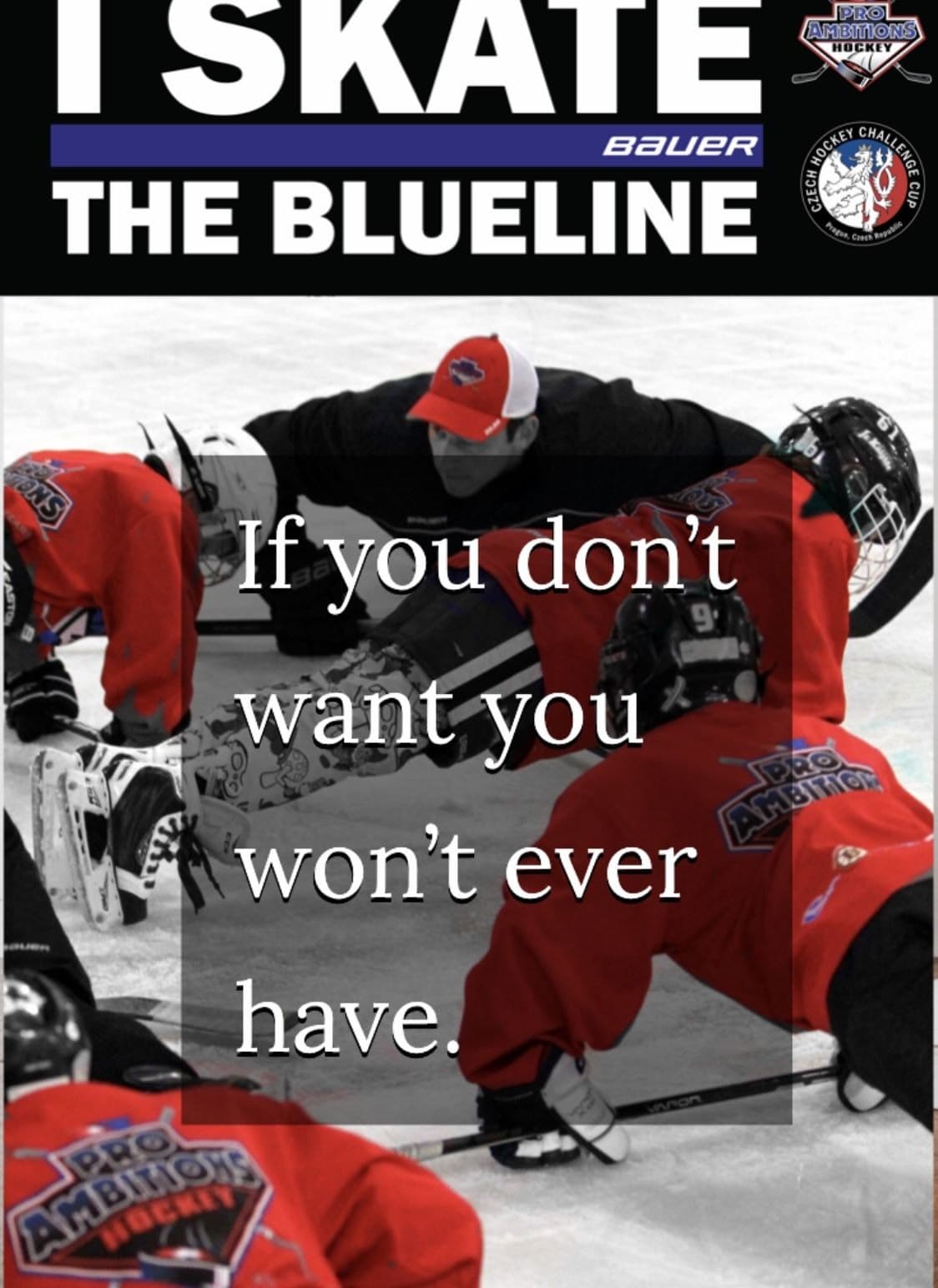
On the ice, I tell players to get into the dirty areas. The corners. In front of the net. The places where it is hard and uncomfortable and nobody wants to be. That is where games are decided.
The same thing applies mentally. You have to be willing to sit in discomfort, to face the hard practices, the early mornings, the conversations about what you are doing wrong. I know this from my own career. The players who made it were not always the most talented. They were the ones willing to go where others would not.
I train kids with this philosophy every single day, both physically and mentally.
Knowledge Is Power
We train your kids with unbiased eyes. We have no agenda other than making your child a better hockey player. We are not here to protect feelings or tell you what you want to hear. We are here to tell you what your kid needs to hear and then give them the tools to act on it.
The goal is simple. They come to us in the summer and they go back in the fall ready to do their thing.
--
Frequently Asked Questions
How important is sacrifice in youth hockey development?
It is everything. Talent gets you noticed, but sacrifice is what builds a career. The players who reach their potential are the ones who consistently choose the hard option, extra ice time over a social event, an early morning workout over sleeping in. Those choices compound over years and become the difference between a player who could have been great and one who actually is.
How do I teach my kid to handle disappointment in sports?
Stop trying to protect them from it. Disappointment is part of the process and it serves a real purpose. When a player gets cut or loses a big game or gets passed over for a spot, the instinct as a parent is to fix it or explain it away. Resist that. Let them sit with it long enough to feel hungry again. Then channel that hunger into work. That sequence, disappointment, hunger, work, is how grit actually develops.
What does it mean to play in the dirty areas of the ice?
It means going to the places on the ice where contact happens and pucks get won or lost, the corners, the front of the net, the boards along the half wall. Those areas are physically demanding and mentally uncomfortable. A lot of players avoid them because it is easier to operate in open space. The players who are willing to compete in those areas consistently are the ones coaches trust and opponents fear.
What should I look for in a summer hockey training program?
Look for coaches who give honest feedback, not just encouragement. Look for a program that trains the whole player, skating mechanics, compete level, hockey sense, and mental toughness. A good program should send your kid back to their team in the fall noticeably better, not just more confident. There is a difference. Confidence without improvement does not last, but real improvement builds the kind of confidence that holds up under pressure.
Apply It On The Ice
Ready to Put This Into Practice?
Pro Ambitions runs the largest youth hockey camp in North America. Train with coaches who wrote articles like this one.