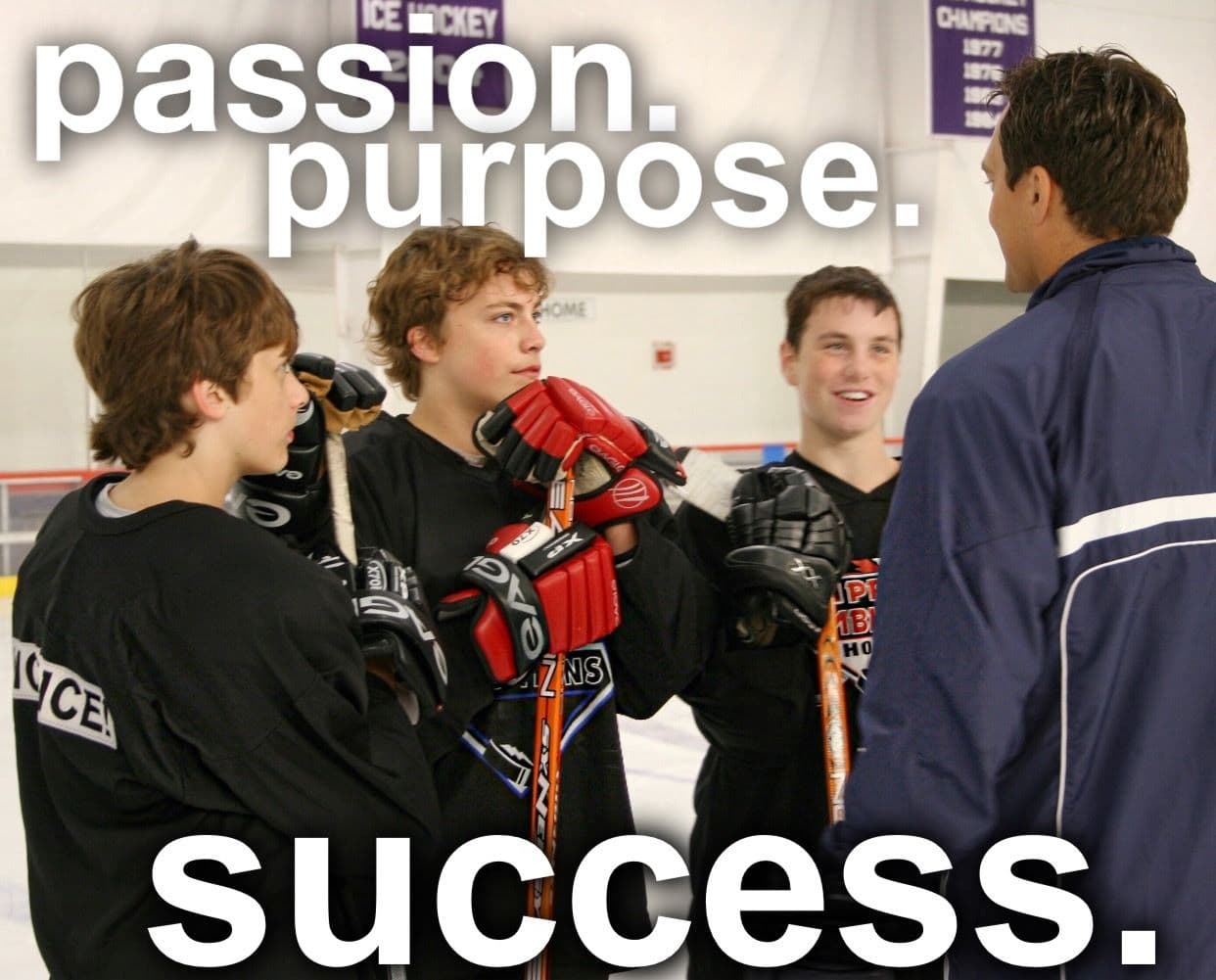
Passion. Purpose. Success.
Discover why passion and purpose are the ultimate ingredients for hockey success. Learn how to set meaningful goals, develop mental toughness, and build the mindset that separates elite players from the rest.
June 30, 2026
The Ingredients That Actually Drive Success
Skill acquisition is one ingredient to success. But it is not the only one. Successfully dealing with frustration and adversity is another. Mental toughness matters too. But Passion and Purpose? For me, that is THE KEY INGREDIENT. Without it, the skills you develop and the toughness you build have no direction. They just sit there. Passion is what gets you out of bed when you do not feel like training. Purpose is what keeps you going when the results are not coming yet.
Play With a Purpose, Every Single Time
When you are shooting at the goal, you are not only shooting at that target. You should be shooting for your goal, both literally and figuratively. ALWAYS SHOOT WITH A PURPOSE, TO SCORE. PASS WITH A PURPOSE. No "hope passes," meaning you hope it makes it to your teammate. Every puck movement should have intent behind it. Sloppy, lazy play in practice becomes sloppy, lazy play in games. Train the way you want to compete.
Define Your Goals Right Now
I want every kid to DEFINE THEIR GOALS FOR THIS SEASON NOW. Not next week. Now.
Clearly state your goals and dedicate yourself to achieving them. Write them down, parents and kids together, both short term and long term. Do you want to play college hockey? Where do you want to play? Watch that team play on the TV or the computer. Be a student of the game. Watch your favorite college team's power play, penalty kill, and goalie. Study how they move, how they communicate, how they compete in the third period when they are tired.
Write down how best to achieve your goals. Getting to sleep earlier? Set a bedtime and stick to it. Drinking more water? Set a daily intake goal and hit it. Plan the week together, homework times, tests, quizzes, games, bedtimes. Staying organized and focused will help with both your hockey and academic goals. These habits compound. A kid who manages his time well off the ice is usually a kid who makes good decisions on the ice.
DO NOT BE AFRAID TO SET LONG TERM GOALS. Set THE ULTIMATE GOAL. VERBALIZE THAT GOAL. Say it out loud to your parents, your coach, your teammates. There is accountability in saying it out loud.
Small Time Blocks Add Up
When can you fit in a little extra training time? Ten minutes here, fifteen minutes there, that works. Do not fall into the mindset of skipping extra training because you do not have a full half hour available. All of those minutes add up over a season. Over a year, they add up to something significant.
Stickhandle in the house with a tennis ball. It will improve your hands, period. Use a wrist gripper in the car. Your wrists need to be strong in hockey and this is one of the easiest ways to build that strength during time you would otherwise do nothing. These are not glamorous training tips. They are just the ones that work.
Small Victories Build Momentum
Wash your equipment. Clean out and vacuum the car for your mom and dad. These small victories feel good and they build the habit of following through on tasks. That habit carries over to the ice. Helping out a teammate, on or off the ice, with hockey or homework, matters too. The culture of a team is built in small moments, not just during games.
Talking to teammates on the ice leads to success. "Stick down." "Behind you." "Got it. Awesome pass. Thank you." "I am right behind you." Communication is a skill just like skating or shooting. Players who talk on the ice are almost always easier to play with and harder to play against.
Prove Them Wrong
The only thing you deserve is what you earn. Passionate athletes do not make excuses. They learn from shortcomings and failures and they come back better. Oh, and prove them wrong. Whoever the "THEM" is in your life.
I always have a color analyst talk to my campers because analysts like Andy Brickley and Billy Jaffe break down the game like no one else. They see things players and even coaches miss. I always learn something talking to both of them. If you want to be a serious student of the game, listen to people who make a living watching and analyzing it.
For help planning your training, email info@proambitions.com and we will get right back to you.
--
Frequently Asked Questions
How do I set hockey goals that actually mean something?
Start by being specific. "Get better" is not a goal. "Make the varsity roster" or "improve my shot percentage in practice by working on release every day" is a goal. Write it down, put a timeline on it, and review it with a parent or coach. Vague goals produce vague effort.
How can my child stay motivated through a tough season?
Reconnect with the purpose behind why they play. When a player is struggling, the instinct is to focus on results. Shift the focus back to the process, the daily habits, the small improvements. Motivation follows action. Get them back to doing the basics with intention and the motivation tends to return.
Is it realistic to fit in extra training with a busy school schedule?
Yes, but it requires planning. Ten to fifteen minute blocks of intentional work add up over time. Stickhandling in the house, grip strength in the car, reviewing game film during downtime. Talk to your child about where those small windows exist in the week. The schedule does not need to be perfect to be effective.
At what age should kids start setting serious long-term goals?
There is no single right age, but by the time a player is in middle school, having a conversation about long-term direction is worthwhile. It does not need to be pressure-filled. It should be an honest conversation about what they want and what it will take to get there. Kids who know where they are going tend to train with more focus than kids who are just going through the motions.
Apply It On The Ice
Ready to Put This Into Practice?
Pro Ambitions runs the largest youth hockey camp in North America. Train with coaches who wrote articles like this one.