Mastery of our Struggles is how we become resilient
Hockey separates the committed from the casual. Discover how mastering your struggles builds true resilience and sets elite players apart at Pro Ambitions.
June 30, 2026

Mastery of Our Struggles Is Where We Find Resilience
Hockey is hard. Otherwise everybody would play. That difficulty is not a bug in the system. It is the whole point. Every shift that beats you up, every drill that exposes a weakness, every loss that stings on the ride home, that is the curriculum. The game is designed to test you, and how you respond to that test determines everything about the kind of player and person you become.
Most kids want the result. They want the goal, the win, the praise. What separates the players who make it from the ones who fade out is the willingness to fall in love with the process of getting better, even when it is uncomfortable. Especially when it is uncomfortable.
--
Why Struggle Is Part of the Game
Nobody skates onto the ice for the first time and looks like an NHL player. Nobody. The struggle is built into the sport from day one, and it never fully goes away. Even at the professional level, you are constantly working through something, a slump, a mechanical flaw, a confidence issue, a new role on the team.
What changes as you develop is not that the struggle disappears. What changes is your relationship with it. You stop treating hard things as signs that you do not belong. You start treating them as information. That shift in mindset is what resilience actually looks like in practice. It is not some big dramatic moment. It is just a player who keeps showing up and keeps working, even when the results are not there yet.
--
What Resilience Actually Looks Like on the Ice
Resilience is not a personality trait you either have or you do not. It is a skill, and it gets built the same way every other hockey skill gets built: through repetition and honest effort over time.
You see it in the player who gets pulled from a game for a bad defensive read and comes back the next period focused instead of sulking. You see it in the kid who stays after practice to work on the weak side of their game even though no one asked them to. Resilience is quiet. It does not announce itself. It just shows up in how a player handles the next hard moment.
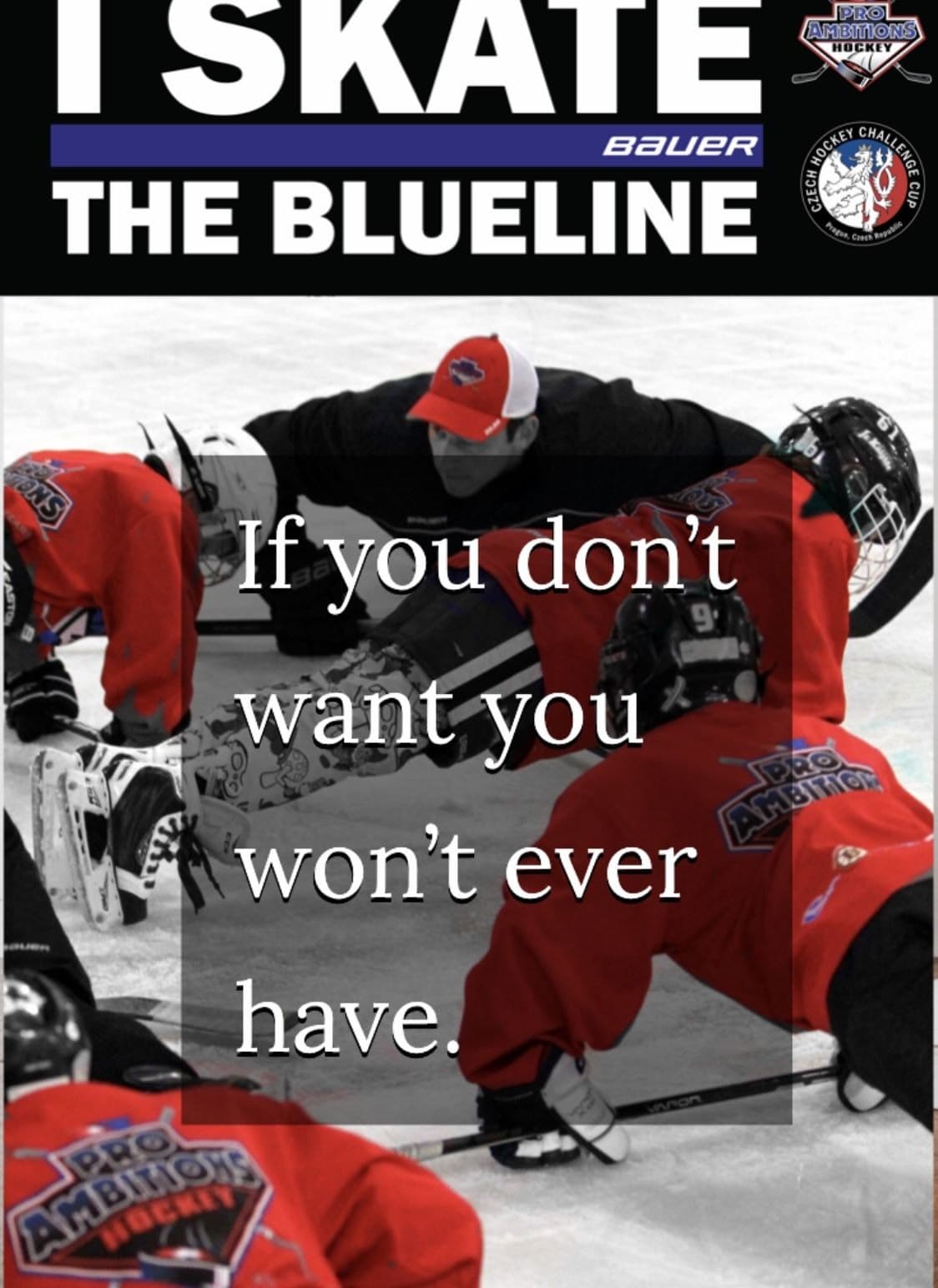
The training environment matters here. When players are pushed through tough drills and demanding situations in a structured setting, they learn that discomfort is survivable. That is not a small thing. A player who knows they can push through something difficult on the practice ice carries that knowledge with them into games, into tryouts, into every situation where the pressure is real.
--
Training Is Where the Work Gets Done
Great to be out there playing and training. That is not a throwaway line. For a lot of kids, being on the ice is the highlight of their day, and that energy matters. But training has to be honest to be useful.
Going through the motions at practice does not build resilience. It just builds the habit of going through the motions. Players have to be challenged at a level that actually requires something from them. That means coaches who push, drills that are genuinely hard, and a culture where players are expected to compete even when it is just a skating drill on a Tuesday morning.
The mental side of development does not happen separately from the physical side. They happen together, on the ice, in real time, when a player is tired and frustrated and still has to execute. That is where the growth is.
--
Frequently Asked Questions
How do I help my child handle frustration in hockey without quitting?
Keep the focus on effort and process, not outcomes. When a young player is frustrated, they need to hear that struggle is a normal part of getting better, not a signal that hockey is not for them. Ask them what they can control, their work, their attitude, their preparation. Help them find one small thing to improve, and let that be the goal for the next session. Quitting during a hard stretch teaches a lesson too, just not the one anyone wants to learn.
At what age should kids start developing mental toughness in hockey?
There is no age that is too early to start learning how to handle adversity in a healthy way. Young players learn from how coaches and parents respond when things go wrong. If the adults around them stay calm, stay focused on improvement, and model persistence, kids absorb that. The specific mental skills get more structured as players get older, but the foundation gets laid early.
Is resilience something a player is born with, or can it be taught?
It can be taught. The research on this is consistent, and so is the experience of coaches who have worked with players across all levels. Resilience gets built through repeated exposure to challenge in an environment where the player feels supported but not coddled. That is what good development programs do. They put players in hard situations on purpose, and then they give them the tools to get through it.
How does playing through adversity in youth hockey translate to real life?
The lessons are direct. A player who learns to stay composed under pressure, who learns that failure is information rather than a verdict, and who learns to keep working when results are slow, those habits do not stay in the rink. They carry over into school, into work, into relationships. Hockey is a vehicle for that kind of development. The game is hard, and that is exactly what makes it worth playing.
Apply It On The Ice
Ready to Put This Into Practice?
Pro Ambitions runs the largest youth hockey camp in North America. Train with coaches who wrote articles like this one.