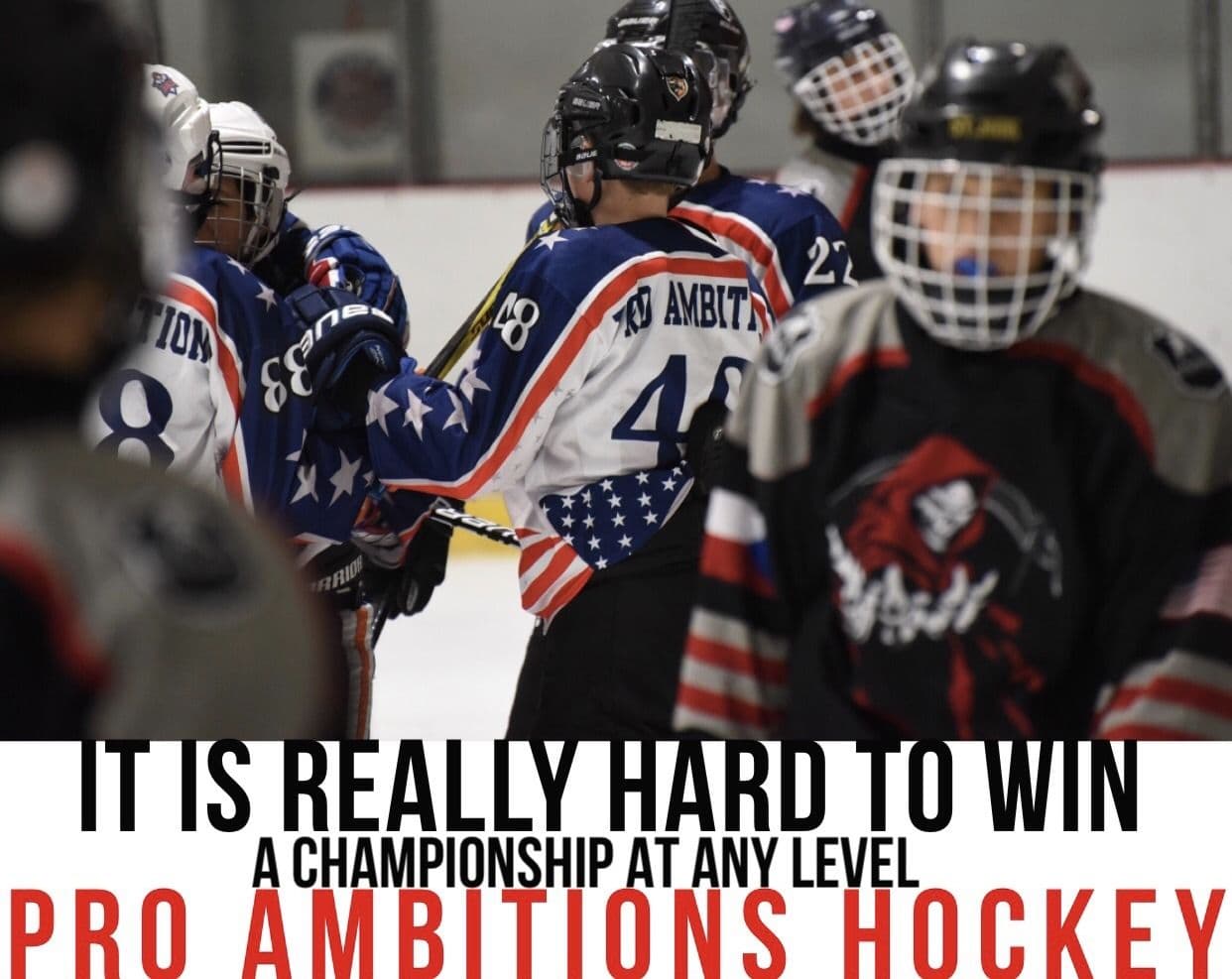
It is Really Hard to Win a Championship at Any Level
Winning a championship is brutally hard at every level. Discover the proven formula: unwavering commitment, grit, teamwork, and heart. Jeff Serowik breaks down what separates champions from the rest.
June 30, 2026
Winning a Championship Is Hard. Period.
It is so damn hard to win a championship. Any sport, any level. From mites to the NHL. Some of the most highly skilled and decorated professional athletes may go a lifetime and never win one, going all the way back to their youth sports days. That is not a failure of talent. That is how hard it actually is.
Championship teams face adversity. All teams do, whether you think so or not. It is not just you hitting a roadblock. The difference is champions do not go in the tank when things get hard. They battle through injuries, illness, politics on the team, unforeseen circumstances, and they stick by one another. They do it unselfishly.
The secret recipe is whole-hearted commitment from every single player, mixed with skill, determination, grit, tenacity, work ethic, and execution of a real plan. Championship teams take care of one another. All in, no matter what. All gas, no brakes. There is a little luck sprinkled in too. Good bounces happen throughout a long season, no question. But luck does not build a team. Culture does.
Stars, Non-Stars, and Why Both Matter
Star players need to step up. They set the tone. When your key players are off, typically the whole team is off. That is just the reality of high-level competition.
But here is what most people miss. The players I call the NON STARS are equally as important. If a star goes down with an injury or illness, somebody else has to step up and fill that role. I have written a full article on this topic, published in national hockey magazines, and it is available on our website. Every coach and every player on every roster needs to understand that concept deeply. Role players win championships. Depth wins championships. The guy on the fourth line who blocks a shot in the final minute, that guy matters just as much as the guy with 30 goals.
What Players from Championship Teams Actually Say
These are the words I have heard from players who have been there:
"We had every bit of adversity you could possibly imagine this season but it did not phase any of us."
"All gas no brakes. Not even a tap on the brakes."
"My teammates would walk through fire for me and vice versa."
"Champions are made from something they have deep inside of them, a desire, a dream, a vision. I hated every minute of training, but I said, don't quit. Suffer now and live the rest of your life as a champion."
"The harder the battle, the sweeter the victory."
Listen to those words carefully. Not one of them is talking about talent. They are talking about mental makeup and commitment to each other.
The Loss That Still Stings
If you lost in that final championship game, it will sting. Forever. I am still not over a loss from over twenty years ago.
I was playing for the Toronto Maple Leafs AHL team. We were based in St. John's, Newfoundland, but our rink was under construction that year. We spent the entire season on the road, living in hotels, riding buses, taking ferries through the cold islands of Nova Scotia. We were exhausted, beat up, banged up really bad. But we were bonded. Brothers. We lost in the final seconds. I was playing with a broken rib and a torn labrum. Other guys were hurt too. So much was on the line. Pretty much every player from the winning team went to the NHL the following year.
I think about that game almost every day. But I also believe that loss gave me the fuel I needed. It pushed me to make the Penguins roster no matter what at that final camp. Pain like that either breaks you or builds you. I chose to let it build me.
How to Plan for Next Season Starting Now
Regroup. Learn from what happened. Stop thinking only about winning and start thinking about how you want your team to be remembered. The team that went further on heart and grit than anyone expected. That means something.
Planned success is sweeter than accidental success. Execute your plan to perfection next season, and start building that plan now. Reflect on your standards and raise the bar, especially if you won a championship or came close. Other teams are already studying you. They are coming for you. I always reference the New England Patriots as the model of planned success and consistent execution. That is not an accident. That is a system built on accountability and relentless preparation.
Think about that final game. Could you have made bolder choices? If something was not working, were you willing to lay it all on the line and make a move? Next time, do not hesitate. Lay it all on the line.
It does not matter what division or pool you compete in. Class A, B, C. Tier one, two, or three. Mites to the NHL. It is hard to win a championship at every single level. Respect that. And congratulations to every team that fought their way to the ultimate battle.
Frequently Asked Questions
Why is it so hard to win a championship even with a talented team?
Talent gets you in the door, but it does not win championships by itself. Teams with more talent lose all the time because they lack cohesion, unselfishness, or mental toughness. The best teams find a way to stay together when things get hard. Adversity hits every team. How you respond to it separates contenders from champions.
How do role players affect a team's chance of winning a championship?
Role players are the backbone of every championship run. When a star player goes down or has an off night, someone else has to step up. Teams that only rely on one or two players to carry the load are one injury away from falling apart. Depth and role players who know their job and do it without complaint, those are the guys who make the difference in a long playoff run.
How should a team recover mentally after losing a close championship game?
Give yourself time to feel it. A tough loss should sting. That is healthy. But then you channel that pain into your preparation for the next season. Do not run from the memory of that loss. Use it. The teams that bounce back strongest are the ones who refuse to let a loss define them and instead let it drive them.
When should a team start preparing for next season after a championship loss?
Now. Not next month. The teams that are serious about winning start their planning immediately. Review what worked, what did not, and where you need to improve individually and as a group. Championships are built in the offseason, in the weight room, on the ice, and in the conversations coaches have with players about raising the standard.
Apply It On The Ice
Ready to Put This Into Practice?
Pro Ambitions runs the largest youth hockey camp in North America. Train with coaches who wrote articles like this one.