Hockey Doesn’t Always Go As Planned
Jeff Serowik's NHL debut didn't go as planned—wrong jersey spelling, dropped gear, and coach screaming. Discover how proper preparation takes away nervousness and builds championship mindset.
June 30, 2026
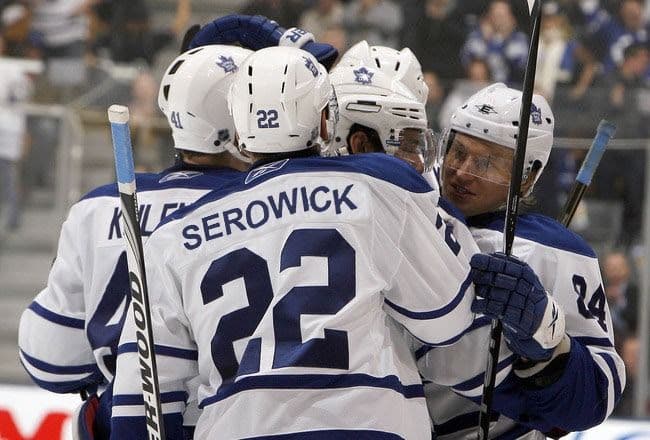
My First Game in Toronto
I'll never forget my first NHL training camp with the Toronto Maple Leafs. I showed up ready to prove myself, straight out of college, and things went sideways before the puck even dropped.
First, they spelled my name wrong on my jersey. SEROWIK. No C. Most people mispronounce it anyway. It sounds like "heroic." But seeing it wrong on an NHL jersey, in that locker room, set the tone for what was coming.
Then my jersey fell off the hanger and hit the floor of my stall before the game. My coach lost it. He screamed at me for disrespecting the Maple Leaf. I wasn't trying to disrespect anything. I was a nervous kid trying to keep it together in the biggest moment of my life so far.
Then the National Anthem started. I forgot to take my helmet off. Standing there on the ice, helmet on, in front of a full NHL crowd. You can't make that up.
Nobody tells you how fast everything moves at that level. Your brain is processing a hundred things at once and the smallest stuff slips through. I learned more about myself in those few hours than in years of practice.
What Kids Can Learn From This
Prepare for Battle
Preparation takes away nervousness. That is the truth. When you are not prepared, your mind fills the gap with anxiety. Every mistake I made that day in Toronto traced back to the same root cause. I was reacting instead of executing. I was in my head instead of in the game.
The players who handle pressure the best are not the ones with the most talent. They are the ones who have put in the most reps. They have been in uncomfortable situations before, and they know how to reset. That comes from preparation. Not just physical preparation, but mental preparation too. Walk through your routines. Know your game plan. Own your pre-game process so that when chaos shows up, and it will, you have something solid to fall back on.
Things Will Go Wrong. That Is Normal.
If you are waiting for conditions to be perfect before you perform, you will be waiting forever. The jersey issue, the anthem, the coach screaming at me, none of that had anything to do with my ability to play hockey. But I let it get in my head. That is on me.
What separates good players from great ones is not avoiding problems. It is recovering from them quickly. The best players I have ever been around have a short memory for mistakes. They reset and move forward. You cannot play your best hockey while you are still thinking about what just went wrong.
Teach your kids to shake it off. Not by ignoring it, but by processing it fast and refocusing. That is a skill. And like any skill, it takes practice.
Skating Is the Most Important Part of Your Game
I call it the sport within our very difficult and tactical sport. If you cannot skate, nothing else matters. Not your shot, not your hockey sense, not your compete level. You have to be able to move on the ice. Fast. Powerful. With edges. With speed.
Skating is the foundation everything else gets built on. A player with average hockey sense but elite skating will find a way to contribute at a high level. A player with great hockey sense but poor skating will constantly be a step behind, and at higher levels, one step is the difference between making a play and getting burned.
Work on your edges. Build explosive power off the start. Develop the kind of speed that creates separation, so you can get to loose pucks first, win battles along the boards, and create time and space for yourself and your linemates. These are the things that get you noticed. These are the things that move you up the lineup.
For personalized skating development and instruction, contact us at info@proambitions.com.
Frequently Asked Questions
How do you handle nerves before a big hockey game?
Preparation is the best weapon against nerves. The more reps you have put in, the more your body takes over when your mind is racing. Build a consistent pre-game routine and stick to it every time, whether it is a practice or a playoff game. Routines create calm. They signal to your brain that this situation is familiar, even when the stakes feel high.
Why is skating more important than shooting or stickhandling?
Skating is the foundation of every other skill in hockey. Your shot means nothing if you cannot get into position to use it. Your stickhandling breaks down under pressure if you cannot create space with your feet. Elite skating gives you time, and time is everything in this game. Players who invest in their skating development early see improvements in every other part of their game as a direct result.
What should youth hockey players focus on most to develop faster?
Skating first, always. After that, compete level and hockey sense. Skills like shooting and passing are important, but they come more naturally over time. What does not come naturally is the habit of competing hard every shift and learning to read the game quickly. Those two things, paired with elite skating, are what coaches at every level are looking for.
How do coaches at higher levels respond to mental mistakes?
They expect them to happen. What they are watching for is how you respond. Can you reset quickly and compete on the next shift? Or do you carry the mistake with you and let it affect your game for the next ten minutes? The players who earn trust from coaches are the ones who bounce back fast. That is a trainable skill, and it starts at the youth level.
Apply It On The Ice
Ready to Put This Into Practice?
Pro Ambitions runs the largest youth hockey camp in North America. Train with coaches who wrote articles like this one.