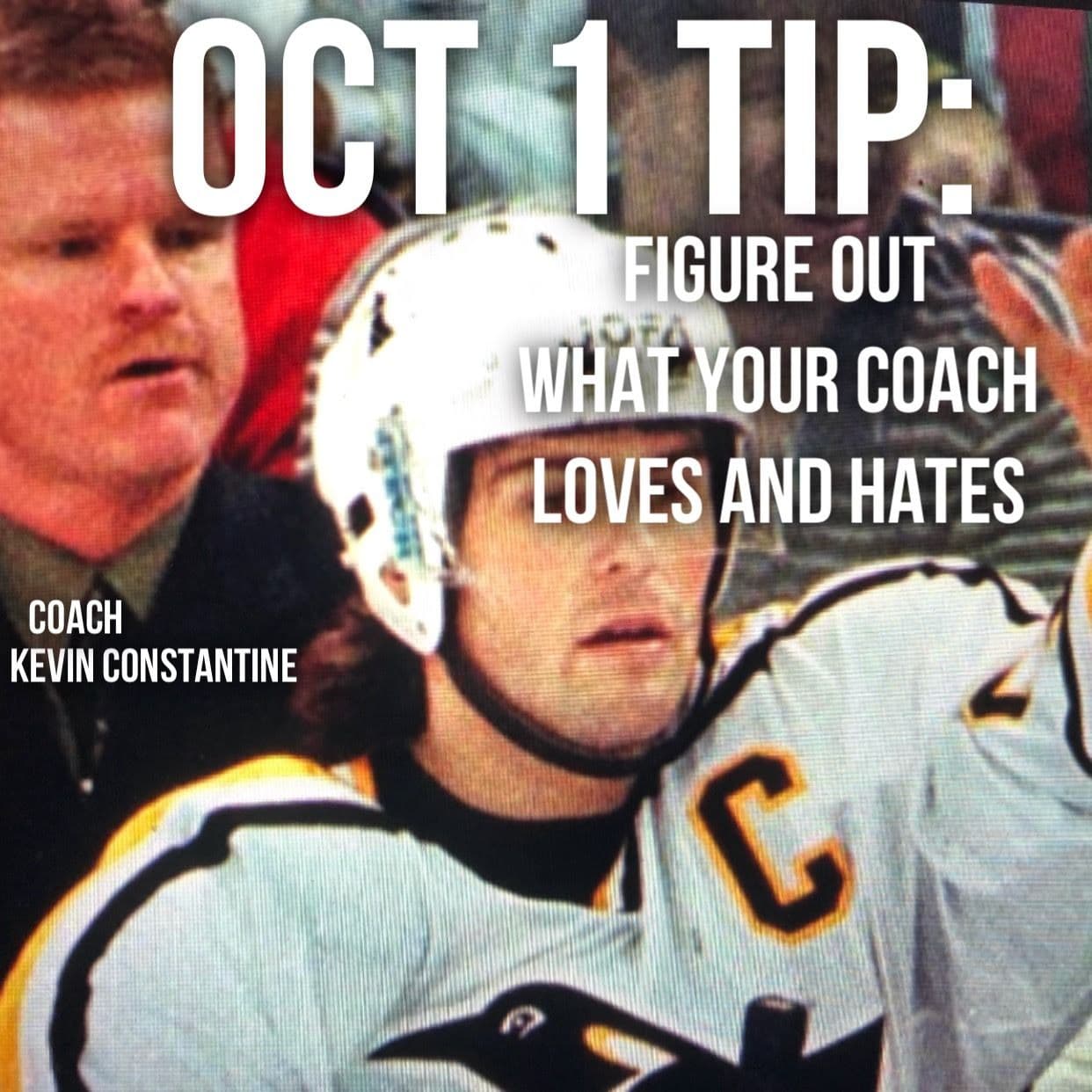
Figure Out What Your Coach Loves and Hates
Discover the secret to earning more ice time: understand what your coach loves and hates. Former NHL player Jeff Serowik shares real examples of how observing coaching priorities can transform your game.
June 30, 2026
Pay Attention to What Your Coach Cares About
Most players show up to practice and just go through the motions. They do their drills, they play hard, and they wonder why they're not getting more ice time. Here's what they're missing: every coach has a system, a style, and a set of priorities. Figure those out, and you have a real advantage. Ignore them, and you're fighting uphill all season.
This is not complicated. It just takes awareness.
How to Read Your Coach
Start by listening. Really listening. Not just to what your coach says to you, but to what he or she says to everyone on the ice.
- ▸What is your coach yelling at players for doing?
- What is your coach praising players for doing?
- What is your coach focusing on in practice, day after day?
- What is your coach's favorite play or style of game?
These answers are right in front of you if you pay attention. Most kids tune it out. The smart ones take notes, mentally or otherwise. After practice, ask yourself what your coach got loud about today. That's a signal. Follow it.
Real Examples From Real Coaches
My Pittsburgh Penguins Coach and "DAP"
My coach with the Pittsburgh Penguins had a saying: DAP. One Defenseman Against Post. He wanted one of us glued to that post, every single time. He also wanted his defensemen skating with longer sticks. So I got a longer stick. And I made sure one of us was always at that post. It sounds simple, but that's the point. I figured out what he wanted and I delivered it. Consistently.
Skating Backwards on the Power Play
Another coach of mine insisted I skate backwards along the blueline on the power play. He did not want me skating forward and pivoting to shoot. He hated that. So for the entire season, I only skated backwards on the blueline in that situation. Did I always love it? That's not the point. He was the coach. I adapted, and I stayed in the lineup.
My Daughter's Field Hockey Coach
My daughter's field hockey coach does not want her running to training runs just to build speed. He wants her running with the ball. So that's how she trains. Every sprint, every rep, she has the ball. You practice how you want to play. That principle works in every sport, at every level.
Match Your Coach's Priorities, Even When It's Not Your Natural Game
Some coaches are built around physical play. Shot blocking, finishing checks, winning battles in the corners. If that's your coach, you do those things, even if your instinct is to be more of a skill player. I had a coach whose number one priority was physicality. Two players got traded that season because he felt they were too soft. That's how real it gets.
Other coaches are the opposite. They want speed and finesse, and too much physical play or taking penalties drives them crazy. I've played for both types.
Think about Claude Julien with the Bruins. Defensive-minded. Structure first. Then look at Bruce Cassidy, more offensive in his approach. Same organization, very different priorities. A player who figured that out quickly had a major edge in earning trust.
This does not mean you abandon your identity as a player. It means you understand what gets rewarded on your current team, and you make sure you're delivering that.
Talk to Your Kids About Their Coach
Parents, this is where you can help. After practice or a game, pull this out of your kid. Not in an interrogation way, just a conversation.
- ▸What did your coach get on players about today?
- What kind of plays did your coach get excited about?
- Does your coach have a go-to system or style?
Kids often notice these things but don't connect the dots. Help them see the pattern. When they understand what their coach values, they can start making smarter choices on the ice. That translates directly to more confidence, more trust from the coach, and more playing time.
Learn your coach's loves and hates. Then go out and give them what they want.
Frequently Asked Questions
Why does it matter what my coach prefers if I'm playing my game?
Because in team sports, your coach decides your ice time. You can be talented and still ride the bench if you're not fitting into what the coach is trying to build. Understanding your coach's system is not about losing yourself as a player. It's about being coachable and maximizing your opportunity. The best players I've seen were the ones who could adapt without losing their core strengths.
How do I figure out my coach's system if they never explain it directly?
Watch practice. Listen to the corrections your coach makes on the ice. Those corrections are a direct window into what your coach values. If your coach stops play three times to fix a defensive zone coverage, that's telling you something. You don't need a sit-down meeting. Just pay attention over two or three practices and the picture becomes clear.
What if my coach's style doesn't match the way I naturally play?
Adapt where you can without completely abandoning your strengths. If your coach wants more physicality and that's not your natural game, find ways to compete harder in board battles or block a shot here and there. Show your coach you hear them. Over time, once trust is built, there's usually more room for your individual game to come through.
Should parents talk to the coach directly about playing time and style?
Save that conversation for the right moment and the right reason. If your child is genuinely confused about the coach's expectations, a respectful, calm conversation can help. But teach your kid to solve this themselves first. A player who learns to read their coach and adjust becomes a better teammate and a better competitor down the road. That skill matters long after youth hockey is over.
Apply It On The Ice
Ready to Put This Into Practice?
Pro Ambitions runs the largest youth hockey camp in North America. Train with coaches who wrote articles like this one.