Embracing Uncertainty by Pro Ambitions Hockey
Uncertainty is inevitable in hockey, but it's also an opportunity. Discover how to reengage daily, control what matters, and build grit through life's ups and downs.
June 30, 2026
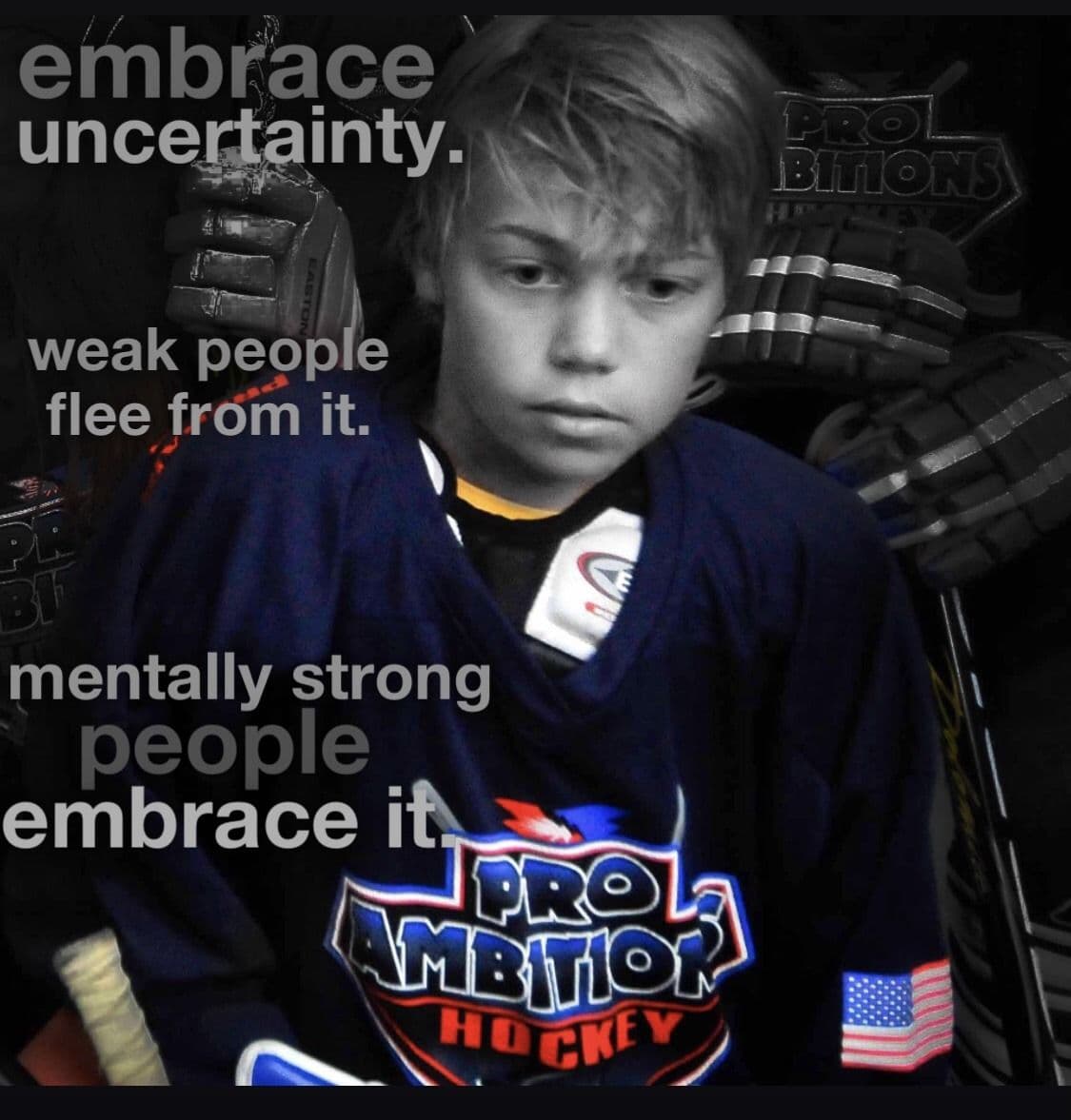
Embracing Uncertainty
I often tell campers to embrace uncertainty because it is a reminder to reengage daily in your commitment to hockey. Hockey is not certain. Every season, team and coach will be different. There are no guarantees of playing time. Or guarantees of things going as planned in hockey.
That is not a negative thing. That is the reality of the sport, and the sooner a player accepts it, the faster they grow. The players I have seen develop the most are not the ones who had everything go smoothly. They are the ones who learned how to keep showing up when nothing felt certain.
Control What You Can Control
One thing you can do is control what is in your control. Your attitude, training, and daily reengagement to the sport by doing the little things right. If you get into a slump or get out of your groove, it is never too late to reengage.
I have seen players lose their spot on a line, get moved to a different team, or go through a stretch where nothing clicks. The ones who bounce back fastest are not the most talented. They are the ones who stay locked in on the process and refuse to let outside circumstances dictate their effort level. Your attitude and work ethic belong to you. No coach, no lineup decision, and no bad game can take those away from you.
Focus on what you bring to the ice every single day. Are you early to practice? Are you listening to your coaches? Are you pushing yourself in training when nobody is watching? Those are the things that add up over a season.
The Value of the Ups and Downs
The ups and downs you go through in hockey will make you grittier, hungrier and more resilient, which is a good thing.
I played in the NHL and I can tell you that the road there was not a straight line. There were cuts, setbacks, and moments where I had to decide whether I was going to keep grinding or walk away from it. Every hard stretch taught me something that the easy stretches never could. Hockey has a way of testing you, and if you let it, those tests will build a version of you that is stronger and more prepared than you were before.
When a young player comes to me frustrated about a tough stretch, I do not tell them to ignore the frustration. I tell them to use it. Channel it into your next workout, your next practice, your next shift. That competitive edge is valuable. Do not waste it feeling sorry for yourself.
Make a Plan
Make a plan with your parents regarding your training or upcoming hockey schedule for the week, month or summer. I always feel better once I make a plan and I think my kids do as well, especially when something doesn't go their way.
A plan gives you direction when things feel uncertain. It does not have to be complicated. Sit down and map out your on-ice sessions, your off-ice training, and your recovery. Know what you are working on and why. When a setback hits, and one will, having a plan already in place keeps you from spinning your wheels.
Reach out to coaches and people you trust for help with your hockey plan. Pivoting and adapting your approach when circumstances change is part of embracing uncertainty and staying committed to your development. There is no shame in asking for guidance. The best players I have coached are the ones who seek out feedback and are willing to adjust. Stubbornness is not the same as toughness.
Review your plan regularly. What is working? What needs to change? A plan is not something you write once and forget. It is a living document that evolves with you throughout the season.
--
Frequently Asked Questions
How do I deal with uncertainty about my hockey future?
Take it one season at a time. You cannot control whether you make a certain team or whether a coach sees you the way you hope they will. What you can control is how you prepare and how you compete every day. Players who stay focused on their daily habits and their process tend to find their way regardless of what obstacles come up. Trust the work.
What should I do if I lose my spot in the lineup or get less ice time than expected?
Do not panic and do not sulk. Go back to your plan and get to work. Talk to your coach and ask what you need to do to earn more ice time. That conversation alone separates players who grow from players who stagnate. Coaches notice who shows up with a good attitude and keeps working even when things are not going their way. Be that player.
How can parents help their kid embrace uncertainty in hockey?
The best thing a parent can do is help their child make a plan and then stay calm when things do not go according to it. Kids pick up on anxiety from the adults around them. If a parent is panicking over ice time or team placements, the player will too. Sit down together, set realistic goals, map out a training schedule, and focus the energy on what your kid can actually control. Keep the car ride home about effort, not outcome.
Is it normal to feel like quitting when hockey gets hard?
Completely normal. Every player goes through stretches where they question whether it is worth it. What matters is what you do with that feeling. Talk to someone you trust, a coach, a parent, a teammate who gets it. Usually those feelings come from frustration, not from actually wanting to quit. Work through it, revisit your reasons for playing, and give yourself some time before making any big decisions.
Apply It On The Ice
Ready to Put This Into Practice?
Pro Ambitions runs the largest youth hockey camp in North America. Train with coaches who wrote articles like this one.