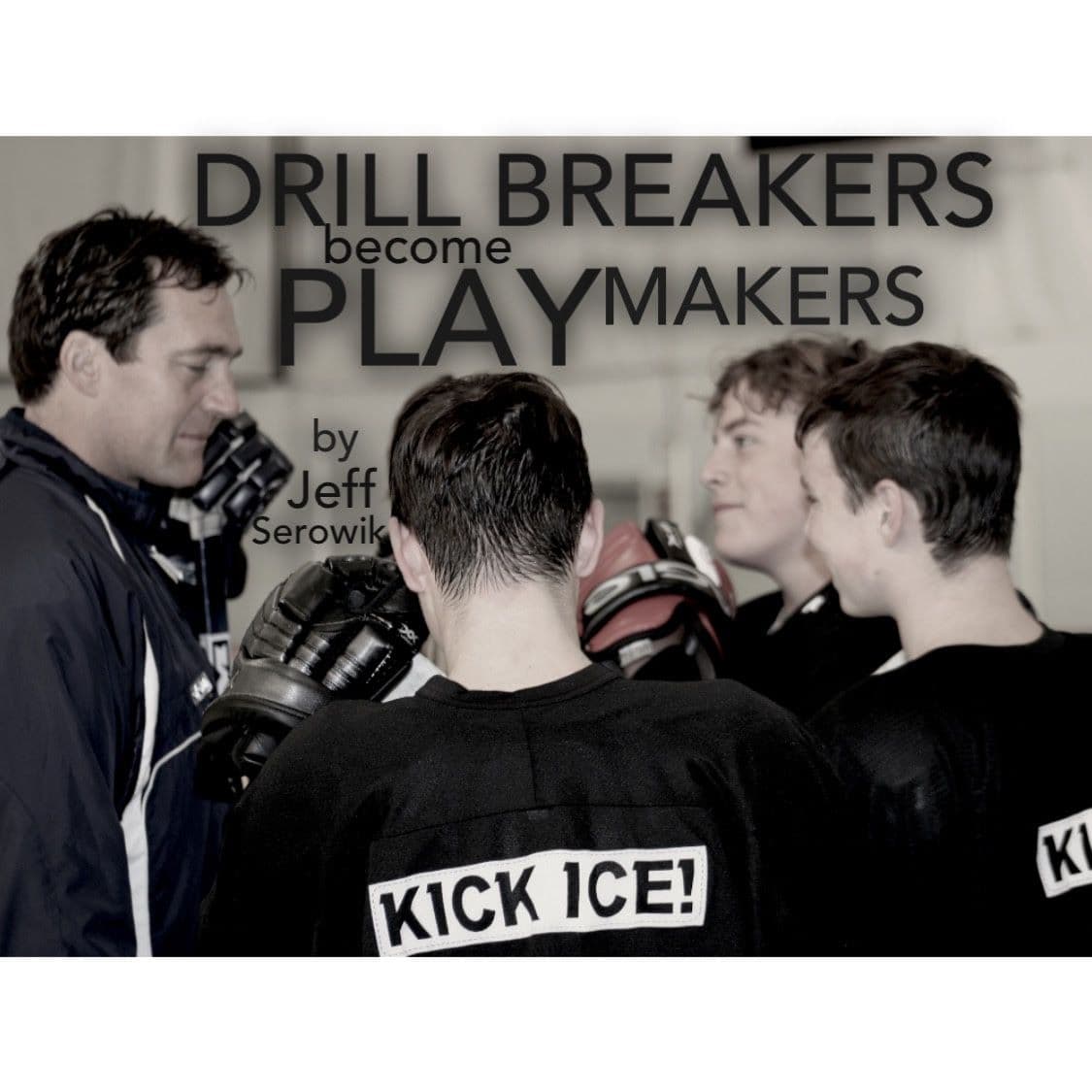
Drill Breakers Become Play Makers
Breaking drills? That's a good sign. Former NHL player Jeff Serowik explains why struggling at practice means you're on the cusp of greatness—and how to embrace the challenge.
June 30, 2026
When the NHL Humbled Me
I remember how complicated the drills were when I made the Pittsburgh Penguins. The systems, the pace, the skill level was all at a level I was not used to. In the minors, I was one of the best players on my team. Practices were not stressful. The significant bump in play to the NHL was similar to the transition I felt from prep school to college hockey.
When playing for the Penguins, I felt the nervous feeling in my stomach that I would typically feel on a game day, but now I had that feeling every day even for practice. If I broke a drill, I was stressed. Whipping passes around practice at lightning speeds, tape to tape, at this level was something I had never experienced. Jaromir Jagr was on my team to put the level of play into perspective. He had no patience and would bang his stick if he was given a bad pass. That environment forced me to lock in every single rep. There was no coasting, no half-effort passes, no wandering attention. Every drill mattered because every player around me demanded it.
That pressure was not punishment. It was the standard. And meeting that standard is what separates players who stick at the next level from players who fade.
What Breaking Drills Actually Means
I wanted to write this article for the kids because if you are too comfortable at practice, you may be ready for a bump up to a new team, which is great. You are on the cusp. I see it at my AAA BU camps most especially.
On the other hand, if you are breaking drills, keep the faith and pay attention and engage to the best of your ability at practice. Breaking a drill does not mean you do not belong. It means the drill is working. It means you are being stretched. The players who get embarrassed and disengage are the ones who stall out. The players who stay focused, watch what went wrong, and try it again are the ones who grow.
Mistakes in practice are information. Use them.
Ice Time Is Not Guaranteed
Remember that ice time is precious and we don't want to waste a minute of it. Our sport is one in that we cannot just go practice in the backyard, we need ice. You are not shooting pucks in the driveway when you miss a drill. You are on a sheet that costs money and time to reserve. Every minute you spend confused, disengaged, or frustrated without refocusing is a minute gone.
This is why mental engagement at practice matters just as much as physical effort. Show up knowing the drills. Watch what the player ahead of you does. Anticipate your turn. Make every rep count before you even touch the puck.
How We Train at Pro Ambitions
At Pro Ambitions Hockey, we will push every player out of their comfort zone. But know this, we will never judge, intimidate or single you out. We want you to be a little nervous so we can push your game to the next level. We will be teaching, training and battling. Your kids will be pushing themselves and feeling very proud. All of this in a learning and encouraging environment.
The nerves you feel at a Pro Ambitions camp are the same nerves I felt in Pittsburgh. That feeling means you are in the right place. We design our sessions so that players are always reaching slightly beyond what feels easy. That is where real development happens. Not in the drills you have already mastered.
One Tip That Changes Everything
ALWAYS KEEP YOUR BODY FACING THE PUCK AND THE PLAY. Can't say this enough to youth players. Never turn your back on the play, ever. When you lose sight of the puck, you lose the read on the game. You become a passenger instead of a player. Train your feet and your hips to stay open to the play no matter what zone you are in. This is a habit, and habits are built in practice.
→ View All Pro Ambitions Camps & Programs
--
Frequently Asked Questions
What does it mean when a player keeps breaking drills at practice?
It usually means the drill is at the right level of difficulty for where that player is in their development. Breaking a drill is not a character flaw. It is a signal that the player is being pushed. The key is how they respond. Players who stay locked in, watch what went wrong, and adjust are exactly the players coaches want on their roster. The ones who shut down or get frustrated are the ones who miss the growth opportunity.
How should a youth hockey player handle being the worst player at practice?
Stay engaged and get comfortable being uncomfortable. Every elite player has been the worst player in the room at some point. I felt it when I joined the Penguins. The gap in skill felt enormous. What closed that gap was paying attention, working hard every shift, and refusing to mentally check out. If your kid is the worst player at a camp or practice, that is not a problem. That is an opportunity.
Is it worth sending my child to a hockey camp if they are still developing basic skills?
Yes. That is exactly who camps are designed for. A good camp meets players where they are and pushes them forward. At Pro Ambitions, we do not assume every player walks in ready for advanced training. We teach, we correct, and we build. The earlier a young player gets into a structured, high-level environment, the faster the foundational habits get built the right way.
Why do coaches stress keeping your body facing the puck and the play?
Because when you turn your back to the play, you are essentially playing blind. You lose your read on where defenders are, where your teammates are moving, and where the puck is going next. Good positioning starts with your body angle. Youth players pick up bad habits early and carry them for years if no one corrects it. This is one of the most common and most correctable issues we see, and fixing it changes a player's effectiveness immediately.
Apply It On The Ice
Ready to Put This Into Practice?
Pro Ambitions runs the largest youth hockey camp in North America. Train with coaches who wrote articles like this one.