Dedication
Becoming elite at hockey requires 12-month dedication and sacrifice. Discover what true commitment looks like and how parents can support their player's hockey goals.
June 30, 2026
What Dedication Really Means
The bottom line in becoming really good at anything is that you must make it a full time job. Especially hockey. Seven days a week. Like Coach Bill says, "No Days Off." That is not a slogan. That is a standard. The players who reach the highest levels are not the ones who showed up when it was convenient. They are the ones who showed up every single day, even when it was hard, even when they did not feel like it.
Hockey does not reward casual effort. The sport is too difficult and the competition is too good.
--
How Much Hockey Is Too Much Hockey
Parents ask me this all the time. For the kid who loves it, who really wants it, who wakes up thinking about getting better, the answer is 12 months a year. That is not crazy. That is what it takes.
Now, that does not mean you run a kid into the ground. Dedication is smart, not reckless. You have to manage the whole picture. Sleep, rest, strength training, diet, academics, all of it needs to point in the same direction, toward the goal. A tired, burned-out kid is not a dedicated kid. The parents and the player need to learn the difference between hard work and overwork, and find the routine that keeps the fire burning long term.
This is a long process. Years and years. There are no shortcuts and there is no off-season if you are serious about it.
--
Dedication in Action: My Daughter's Story
My daughter is a dedicated field hockey player. She plays six days a week competitively at school, and my wife and I drive five hours round trip on Sundays so she can train with her club for specialized skill work. She looks forward to playing on turf, which you only find at Division 1 colleges. She wants to go. She wants that level of training and never has a complaint about the drive, the early mornings, or the missed weekends.
My wife and I have no complaints either. We miss Patriots games. We give up our Sundays. We do it because she wants it, and we admire that in her.
Here is what I want you to notice. She is not being pushed. She is pulling us. That is the difference between a kid who burns out and a kid who breaks through. When the desire comes from the player, dedication does not feel like a sacrifice. It feels like purpose.
--
Dedication Is a Skill You Can Teach
Here is something most people miss. Dedication is also a learned skill. It does not just show up on its own. We talk about it at home. We talk about my daughter's goals, what she wants to achieve, and what is actually required to get there. Those conversations matter. They connect the daily grind to the bigger picture.
Parents, this is part of your job. Sit down with your kid and explain what dedication really means. Not as a lecture, but as a real conversation. What do you want? What is it going to take? Are you willing to do that? When a kid can answer those questions clearly, they start to own the process instead of just going through the motions.
Dedication taught early becomes a habit. That habit will serve them in hockey and in everything else they take on in life.
--
Hockey Is Hard. That Is the Point.
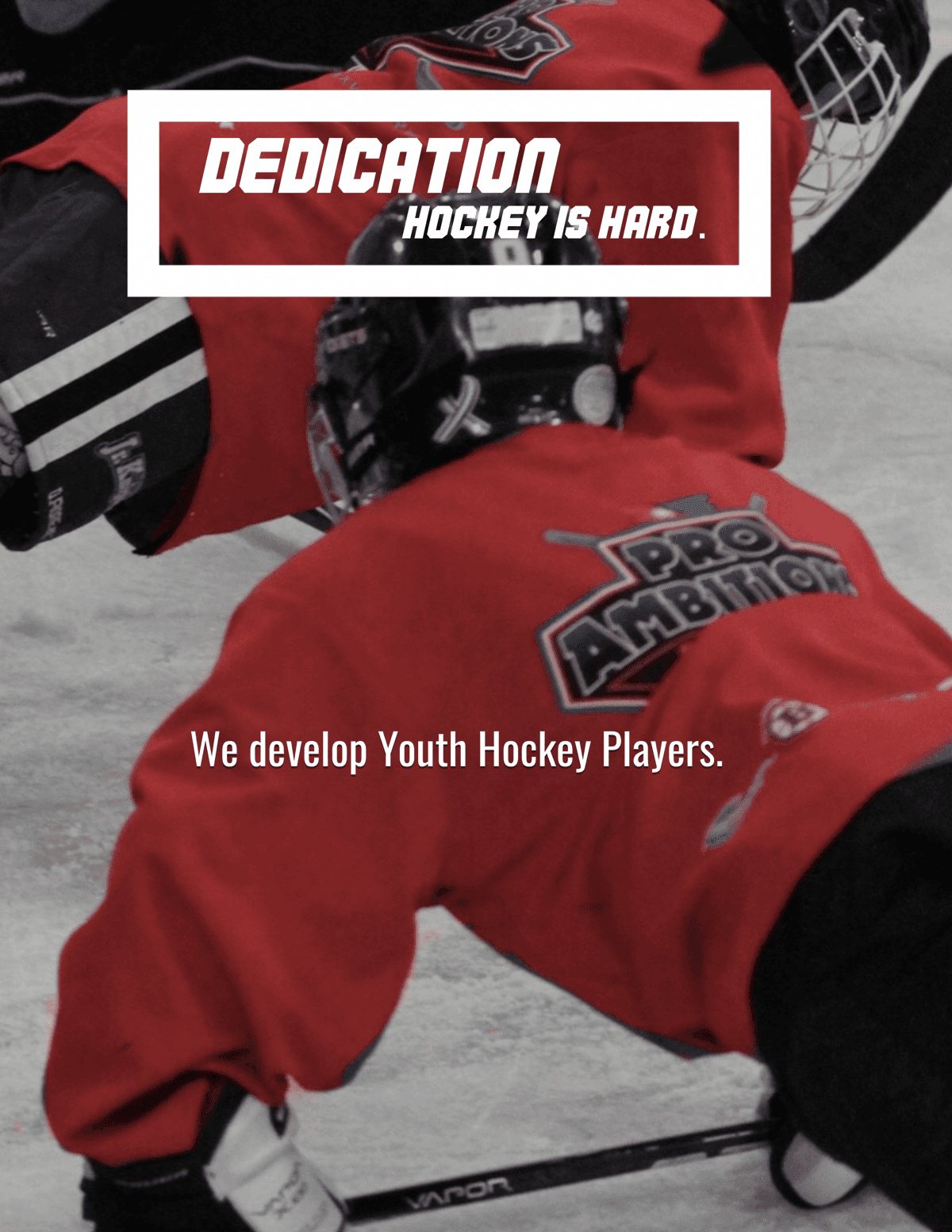
Hockey is really hard. I believe it is the most difficult sport to master. The skating alone takes years before it becomes second nature. Add stickhandling, shooting, reading the play, competing physically, and doing all of it at full speed on ice, and you start to understand why so few players ever reach a high level.
That difficulty is not a reason to walk away. It is a reason to commit. Every rep matters. Every practice matters. The players who understand that early are the ones who separate themselves over time.
--
Frequently Asked Questions
How do I know if my child is truly dedicated to hockey or just going through the motions?
Watch where the energy comes from. A truly dedicated kid asks to go to the rink, practices on their own, talks about hockey between sessions, and bounces back quickly from tough games or bad feedback. A kid who is just going through the motions needs to be pushed constantly and checks out the moment practice gets hard. You cannot manufacture that internal drive. But you can have honest conversations with your child about what they actually want, and let their answer guide the commitment level.
Is year-round hockey really necessary, or is that just too much pressure on a young player?
For the kid who wants to play at a high level, yes, 12 months a year is the standard. The players they are competing against are training all year. That said, year-round does not mean every day on the ice doing the same thing. It means staying active, continuing skill development, doing off-ice training, and keeping the body and mind engaged with the game. The volume and intensity should match the age and development stage of the player.
What does off-ice dedication look like for a serious hockey player?
Sleep is training. Diet is training. Strength and conditioning work is training. A dedicated hockey player is thinking about recovery, nutrition, and physical development, not just ice time. Managing academics matters too, because a student who is organized and disciplined in school tends to carry that same discipline onto the ice. The best players I have seen treat everything connected to performance as part of the job.
At what age should a player start taking dedication to hockey seriously?
There is no perfect age, but the earlier a player learns what real commitment looks like, the better. Even young players can understand simple concepts like showing up ready, working hard in practice, and taking care of their body. As they get older, the expectations grow. The habits built early are the ones that carry them forward. Do not wait until high school to start those conversations.
Apply It On The Ice
Ready to Put This Into Practice?
Pro Ambitions runs the largest youth hockey camp in North America. Train with coaches who wrote articles like this one.