Channel Your Frustration
Self-pity is emotional quicksand that distracts athletes from solutions. Discover how elite hockey players channel frustration into competitive advantage and eliminate negative self-talk.
June 30, 2026
A Good Read Before Tryouts
Share this with your kids before they step on the ice for tryouts. The mental side of competition is where most young athletes lose ground, and this article from a sport psychologist gets right to the point.
Here is an idea that will transform your life.
As long as you do it, your athletic life will be transformed.
Raise your right hand and say, "I will never let self-pity get the best of me."
That one sentence, if you actually mean it, changes everything about how you compete.
What Is Self-Pity?
It is the idea that you should never have to suffer.
Other athletes can endure setbacks, maddening officiating, or bad coaching. Just not you.
Self-pity tells you that your situation is uniquely unfair. It convinces you that because something is hard, it must be wrong. Every hockey player I have ever coached who got stuck in self-pity stopped growing. They were too busy being the victim to do the work.
How Self-Pity Shows Up in Competition
When something happens you do not like, you take a turn to negative town.
You complain, in your head and to people. About officiating, coaching, conditions, even your own mistakes. The list of things to complain about in sport is long and distinguished.
When bad things happen, most athletes indulge their self-pity and complain. They complain in their mind and to anyone who will listen. They get attention this way.
Self-pity is normal, but it is also emotional quicksand. It distracts you from finding solutions. Once activated, self-pity wants more pain, and it will feed off itself to make you miserable. I have watched talented kids get cut from teams not because they lacked skill, but because their attitude poisoned everything around them. Coaches see that. They always see it.
The Steve Nash Example
In the NBA, each player gets a box score from the coach. And the last five letters a player wants to see is DNP/CD. It stands for "did not play, coach's decision."
Basketball superstar Steve Nash got these letters from his coach 14 times straight in his rookie year.
Self-pity? Not for Steve. Not his style.
He figured playing behind two of the best guards in the NBA was a great opportunity to improve. He said, "The practices are my games. My job is to challenge them every day, and that will pay off for me in the future."
That mindset is exactly what separates good athletes from great ones. Nash did not wait for his circumstances to change. He decided to be better inside the circumstances he was given. You can do the same thing on your team, at your practice, at your tryout.
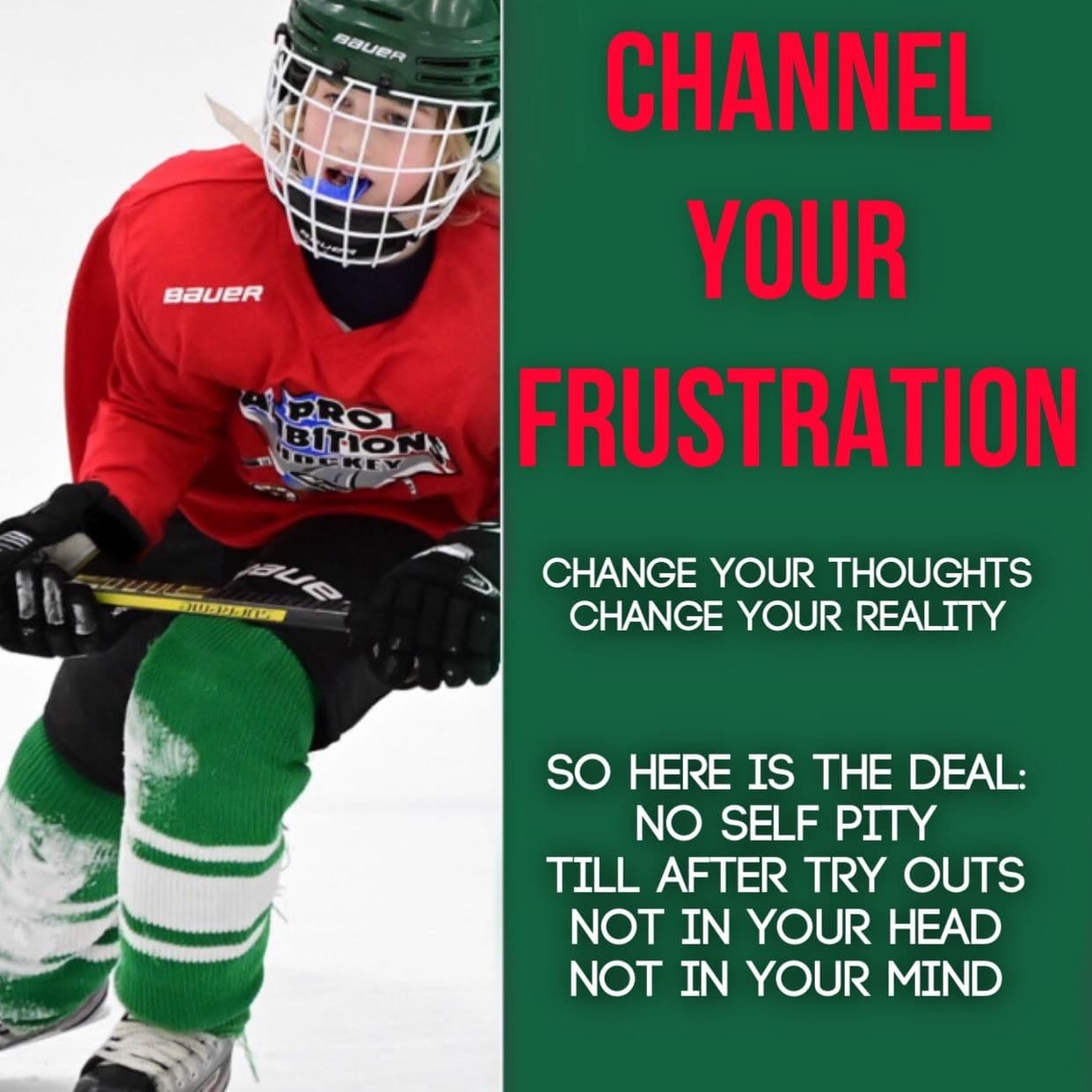
Channel Your Frustration
So here is the deal.
No self-pity for the next 7 days. Not in your head and not out loud.
Instead of self-pity, you are going to channel your frustration. You are going to make your opponent pay. When the coach scratches you, when the ref makes a bad call, when you turn it over at the wrong time, you take that energy and you put it somewhere useful. You skate harder in the next shift. You study the game more that night. You get to the rink earlier the next morning.
Frustration is fuel. The only question is whether you burn it productively or let it burn you. While you are re-training your mind, you can also work on developing superior mental toughness. That combination, physical work and mental discipline, is what builds players who actually make it.
Frequently Asked Questions
How do I stop feeling sorry for myself after a bad game or getting cut from a team?
Start by recognizing that the feeling is normal. Every athlete feels it. The difference is what you do next. Give yourself a short window, maybe an hour, to be disappointed. Then shift your focus to what you can control. What went wrong that you can actually fix? Write it down and get to work on it. Sitting in the feeling longer than that does not help you, it just delays your development.
My kid shuts down when things go wrong on the ice. How do I help them build mental toughness?
Do not rescue them too quickly. Parents who rush in to fix the disappointment are unintentionally teaching kids that they cannot handle adversity. Let them feel it, then have a calm conversation about what they can do differently. Ask questions instead of giving answers. Mental toughness is built through struggle, not around it. Your job is to support the process, not eliminate the difficulty.
Is it bad to be frustrated during a game or at tryouts?
No. Frustration means you care. The problem is not the emotion, it is what you do with it. A player who channels frustration into compete level and focus is dangerous to play against. A player who lets frustration turn into excuses and body language is easy to shut down, and easy to cut. Learn the difference between using the emotion and being used by it.
How does self-pity affect a player's chances at tryouts?
Coaches at every level are evaluating character, not just skill. When a player makes a mistake and their head drops, when they argue a call, when they sulk after a bad shift, that gets noticed immediately. Tryouts are short. You do not get many shifts to make an impression. A player who competes hard through adversity and keeps coming back stands out. That quality is rarer than people think, and coaches value it.
Apply It On The Ice
Ready to Put This Into Practice?
Pro Ambitions runs the largest youth hockey camp in North America. Train with coaches who wrote articles like this one.