Body Language and Swagger
Your body language dictates your performance. Discover how elite youth hockey players use swagger, composure after mistakes, and team presence to intimidate opponents and build unshakeable confidence.
June 30, 2026
What Body Language Actually Does
Your body language affects how you play. It is nonverbal communication, and it works in every direction at once. Coaches read it. Your teammates read it. Your opponents read it. And maybe most importantly, your own brain reads it.
The way you carry yourself will affect your own confidence and dictate whether you have a good game or a bad game. This is not a soft concept. This is real. Players who look defeated before a puck drops are already behind. Your physical posture sends a signal to your nervous system. Stand tall and your brain starts to believe you belong. Slouch and it starts to doubt you.
--
How You Walk In Matters
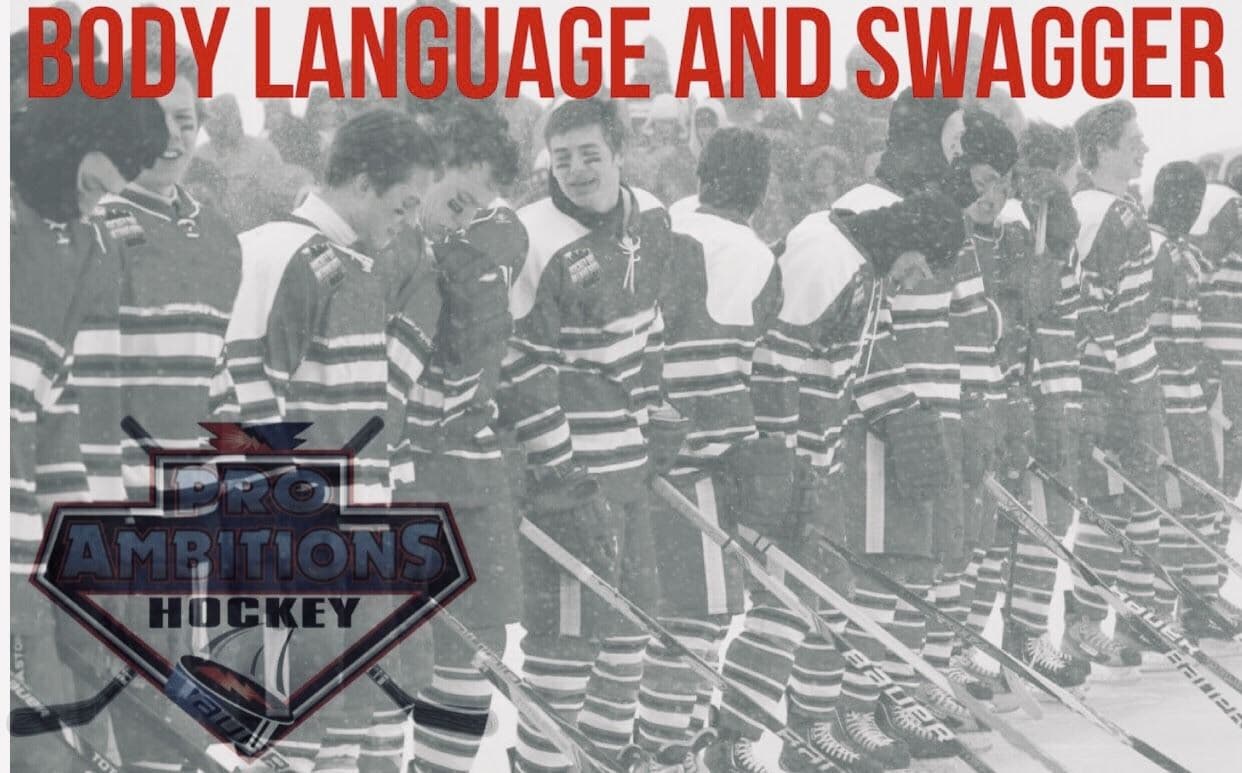
Walk in as a team. Stand up straight. Coaches, start a tradition around how your team enters the rink. Even a subtle show of solidarity will shake your opponents up. When a group of players walks in together, locked in, moving with purpose, it sends a message before anyone touches the ice. That message is that this team is ready and they are not here to mess around.
Pump each other up before the game. Get the energy going in the locker room. That carries onto the ice. The tone you set before warmups is harder to change once the puck drops, so set a good one early and be intentional about it.
--
How You Handle Mistakes
Hockey is a game of mistakes. Every single player at every single level makes them, including guys in the NHL. What separates players is not how they avoid mistakes. It is how they react to them.
Do not bang your stick when you make a mistake. That tells everyone on the ice exactly where your head is. After a mistake, immediately refocus and get back into your A-frame hockey stance. Butts out, head up, ready to go. Do not skip a beat. The best players in the world have short memories on the ice. That is not something that comes naturally for most people. It is trained, rep by rep, starting in practice.
If you fall, get up. No big deal. We all fall. Pop back up and keep moving. In practice, we actually want you pushing yourself hard enough that falling is possible. That is how you get better. If you are never losing your edges on a new move, you are not trying hard enough.
Tap your neighbor on the bench when they come back from a shift. One tap. It tells them you see them and you are in this together. The small stuff adds up. A team that communicates without words is a team that trusts each other when it counts.
--
On the Bench
Keep your head up after a bad shift. Put it down and you are done mentally, and everyone can see it. Stay laser focused on what is happening in the game. Study the play. Watch the other team. Be ready to go the second your number is called.
Skate hard back to the bench on a change. Do not glide in. That habit tells your coach something, and it is not something you want them thinking about you when they are deciding who goes over the boards in a big moment. Coaches have long memories. The player who dogs it on one shift will not be the player a coach trusts in overtime.
Never go through the motions on the bench. Your coach is always watching, and so are your teammates.
--
On the Ice
Skate hard on the backcheck just as hard as you do on the forecheck. I have seen more players lose shifts, lose ice time, and lose coaches' trust by loafing back than almost anything else. Effort in one direction and laziness in the other is not a trade a good coach will accept. Compete level is not something you can fake for very long.
Keep your head on a swivel. Always. Keep your feet moving. Always. These are not suggestions, they are the standard. The players who stand and watch are the ones getting walked past and benched.
Do not ever go through the motions in a game or a practice. If you are on the ice, you are working. That is the deal.
--
Frequently Asked Questions
Why does body language matter so much in hockey?
Hockey is a fast game and communication happens constantly without words. The way you carry yourself tells your teammates whether they can trust you in a tough moment, tells your opponents whether you are rattled, and tells your coach whether you are mentally in the game. Players who show bad body language after a mistake often compound that mistake because their head is not back where it needs to be.
How can a young player build better body language habits?
Start in practice. Every single rep is a chance to get back into your stance, keep your head up, and skate hard in both directions. The habits you build when no one is watching are the ones that show up in a game when everything is on the line. Coaches notice the player who recovers quickly and looks ready. That player gets more opportunities.
Does body language actually affect opponents?
It does. A team that walks in together, skates with purpose, and does not react visibly to mistakes is harder to play against. Opponents look for cracks. They look for the player who just banged their stick or the one slouching on the bench. When they do not find those cracks, it forces them to work harder mentally. Confidence is contagious, and so is doubt.
What should a player do right after making a bad mistake in a game?
Get back into your stance immediately. Head up, feet moving, eyes on the play. You cannot undo the mistake. What you can control is the next five seconds. The players who recover fast are the ones coaches trust in close games. The ones who hang their head become a liability, not because of the mistake, but because of what comes after it.
Apply It On The Ice
Ready to Put This Into Practice?
Pro Ambitions runs the largest youth hockey camp in North America. Train with coaches who wrote articles like this one.