Sept 10 Tip The Forwards Job
Discover why elite forwards dominate all 200 feet of ice. Pro Ambitions breaks down three-zone mastery and how average skill players find success through consistent execution.
June 30, 2026
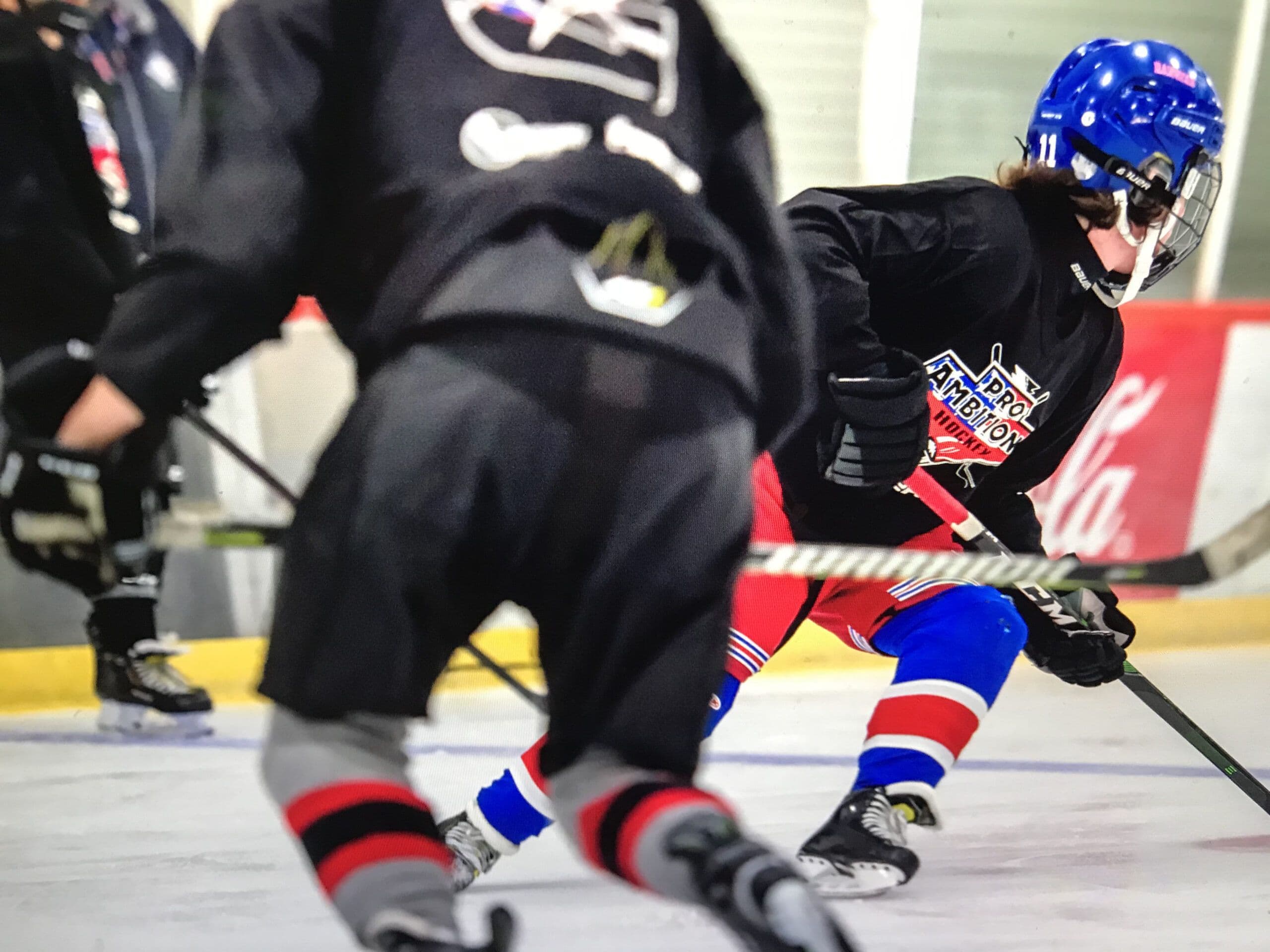
Forwards Must Be 200-Foot Players
Forwards need to be equally engaged on all 200 feet of ice. Not just in the offensive zone when the puck is on your stick and you have a chance to score. All 200 feet. Every shift. That is the job.
Youth players with average speed and skill will find success if they understand and execute what to do in all three zones. Consistently doing things right in all three zones is what separates players at every level. Master these concepts and it will take years of practice, coaching, repetition, and real game experience to own them completely. But the process starts now.
--
The Golden Rule: Backcheck as Hard as You Forecheck
The golden rule for forwards is backchecking equally as hard and fast as forechecking. Coaches will notice this in youth players especially. If you are flying back to defend with the same effort you use to attack, you are already ahead of most kids your age. Most forwards coast back. Do not be that player.
Hockey shifts are short for a reason. You should be out there for less than a minute. Put in 100 percent for that entire shift. Every single shift. That is the most important thing you can accomplish in your game right now.
--
Covering Open Players, Not Just the Puck
Pick an open player to cover and do not always chase the puck carrier. Sometimes the best thing you can do is let your defenseman get the puck and pass it to you. Open players are always the most dangerous. Kids forget this constantly.
Sometimes the better play is to let your D cover the puck carrier while you grab the open man. Read the situation. Know where the threat is. If you are always chasing the puck, you are leaving someone dangerous wide open and your coach will see it.
--
Creating Space in the Offensive Zone
When a teammate has the puck behind the net, forwards do not crowd the net. Youth players crowd the net in this situation all the time. Give yourself space to receive the pass and shoot a wrist shot or snap shot. Those are your most accurate shots. When players congest the front of the net, they take away their own shooting lanes and make the goalie's job easier. Talk with your linemates about this before the game so everyone knows their role in that situation.
--
Puck Management: Putting It in the Right Area
When you have to put the puck into your zone, do not wrap it around the boards blindly. Shoot it at an angle off the boards where your defenseman can actually catch it. That is called an area pass off the wall. The key for all forwards is getting the puck into the right area, whether that is down low for a cycle or back to the defense. That is puck management. It sounds simple. It is one of the hardest habits to build.
What a forward does with a pass from the D dictates playing time in youth hockey all the way up to the NHL. Catching a wrap pass, handling a breakout pass under pressure, taking the hit to protect the puck, eating the puck, chipping it out, making the right pass to the center or back to the D. All of it matters. These are the moments that build real hockey players.
--
The Little Things Coaches Always Notice
As a youth coach I look for a lot of small things that kids do on the ice. Do not feel like you had a bad game just because you did not score goals or get assists. There are a lot of little accomplishments to make out there, and a good coach will notice them.
When in doubt, do not ice it. Hoist the puck up into a safe spot. I used to practice flipping the puck into the air to a safe spot over and over. This is a small weapon any smart player can develop with repetition at home, in the garage, little hoists again and again. When I see a youth player execute that little hoist in a game, it is obvious they have been working. Coaches see that stuff immediately.
Control the controllables.
--
Frequently Asked Questions
What does it mean for a forward to be a 200-foot player?
It means you are doing your job in all three zones, not just when you have a scoring chance. You are backchecking hard, picking up open players in your own end, managing the puck on breakouts, and putting in full effort every shift. A 200-foot player is a player coaches trust and put on the ice in important situations.
Why do coaches care so much about backchecking in youth hockey?
Because it shows effort, hockey sense, and coachability all at once. Any kid can try to score. Not every kid busts back on defense with the same energy. When a coach sees a forward backcheck hard on every shift, that tells them a lot about that player's character and how serious they are about developing.
How can youth players improve their puck management in their own zone?
Start by understanding where the puck needs to go before it gets to you. Practice receiving passes under pressure and making quick decisions. Work on your area passes off the wall so your defensemen can handle pucks cleanly. A lot of this gets built in practice through repetition, but thinking about it before games matters too.
What if I played a full game and did not score or get an assist?
That does not mean you had a bad game. Did you backcheck hard every shift? Did you cover your man in the defensive zone? Did you take a hit to protect the puck? Did you make the right pass on the breakout? Good coaches track all of those things. Goals and assists are not the only way to have an impact on a hockey game.
Apply It On The Ice
Ready to Put This Into Practice?
Pro Ambitions runs the largest youth hockey camp in North America. Train with coaches who wrote articles like this one.