Rollerblading
Connor McDavid agrees: rollerblading transforms your hockey game. Jeff Serowik credits summer rollerblading on the Cape for his faster stride, stronger core, and elite skating ability that led to his D1 commitment.
June 30, 2026
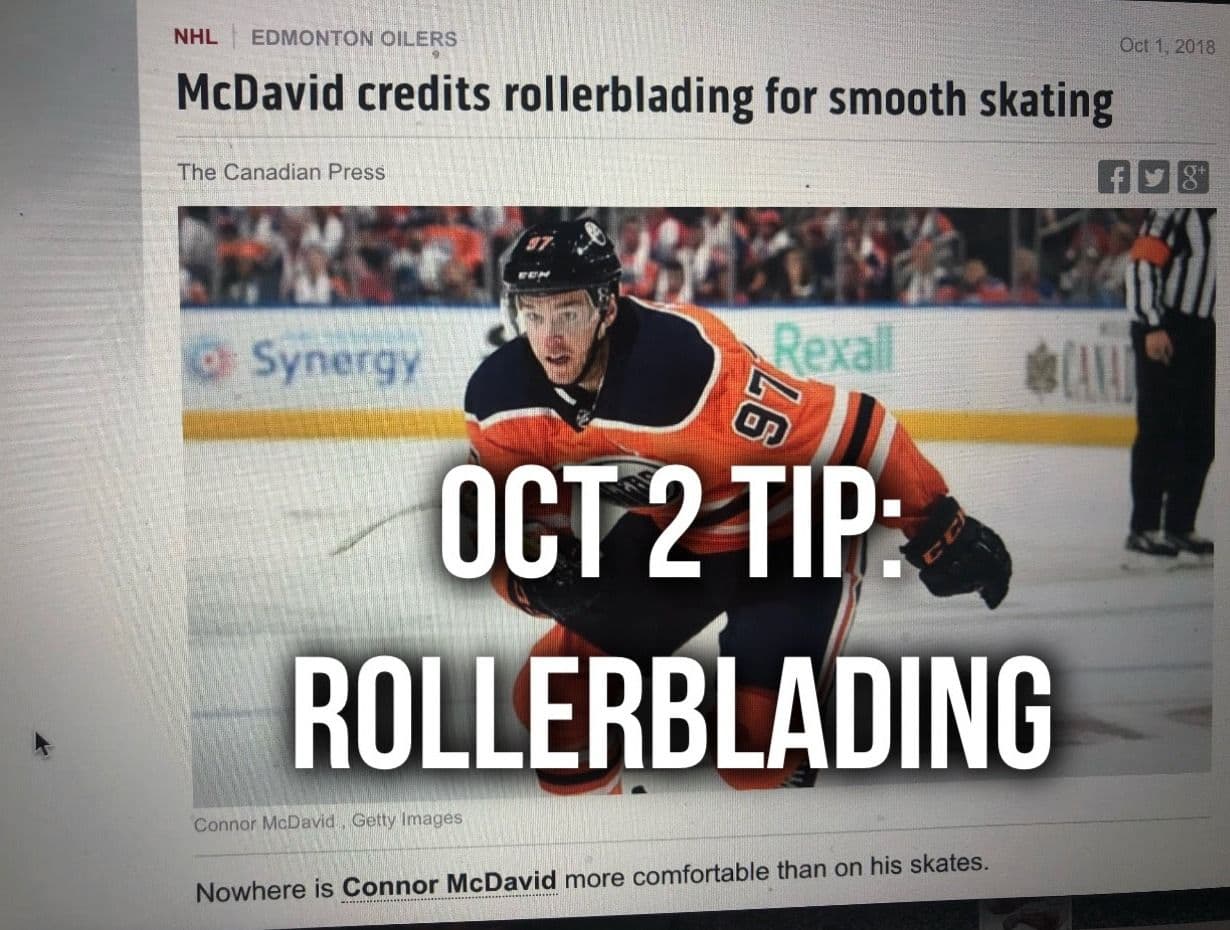
Why I Agree with McDavid on Rollerblading
I had another tip scheduled for today. Then I read McDavid's article this morning and changed my plans. When one of the best players in the world points to something that made him great, you listen. I agree with Connor McDavid 100 percent. Here is why.
My Story Starts with a Pair of Rollerblades
The summer before my junior year at Lawrence Academy, my dad bought me rollerblades. That gift changed my career more than I realized at the time. When I got to Lawrence that fall, before the hockey season started, I noticed the rink did not have ice in yet. It was concrete. I asked if I could rollerblade on it. The headmaster and hockey coach said yes.
A couple of my teammates bought rollerblades and joined me. We rollerbladed every day for hours after school during the off-season. Nobody told us to. Nobody scheduled it. We just did it because it felt good and we were competitive kids who wanted to get better.
The Results Spoke for Themselves
I had the season of my life that junior year at Lawrence. I was drafted that June and committed to my D1 scholarship to Hockey East at Providence College. I had many choices of schools. I did not want to fight Brian Leetch for ice time at BC as a freshman, and I did not want to compete with my brother as a walk-on at BU. He was a great player and I wanted the best for him. PC felt right for me. The point is, the doors opened because my game took a big leap, and rollerblading was a major part of that.
The Bike Path That Built My Pro Career
After Lawrence, I rollerbladed every summer on the Cape. The bike path in Falmouth to Woods Hole along the ocean. Five to seven miles. I did that religiously throughout my college and pro career. That bike path became my off-season training ground, and I never took it for granted.
What Rollerblading Actually Does for Your Game
My stride lengthened. I became faster. Stronger. My legs were solid as rocks. So was my core. I became an even better skater. I attribute this to rollerblading, and so does McDavid.
The reason rollerblading works is simple. You are mimicking the push and glide pattern of skating, but on a surface that demands more balance and more deliberate effort from your stabilizing muscles. There is no edge to cheat on. Every stride has to be clean or you fall. That forces your body to develop the kind of balance and leg strength that ice skating alone does not always build. Over miles and miles on that bike path, those mechanics became natural for me.
It was not just my stride and speed that improved. My balance got sharper. My body learned to stay low and stable through the full extension of each push. Those are habits you carry directly onto the ice.
My Recommendation to Parents
I hate to add to your hockey shopping wishlist, mom and dad. The sport is expensive enough. But I have to recommend buying your player a pair of rollerblades. It helped me a lot. Bauer has a range of rollerblades available at different price points, so you do not have to break the bank to get started.
You do not need a fancy training facility. You need a sidewalk, a parking lot, or a bike path. The work is free once you have the skates. I hit that same Falmouth to Woods Hole path again this summer. Awesome memories on that beautiful stretch along the ocean. And my legs reminded me immediately why I spent so many summers out there.
If your kid is serious about becoming a better skater, this is one of the simplest and most effective tools available. Get the rollerblades. Get outside. Put in the miles.
--
Frequently Asked Questions
How often should a hockey player rollerblade in the off-season?
Aim for at least three to four times per week during the off-season. Consistency matters more than any single long session. Even 30 to 45 minutes at a solid pace will build real leg strength and improve your stride over a summer. If your player is motivated, daily skating is even better. The repetition is what creates the muscle memory that shows up on the ice.
Are rollerblades that much better than other off-ice training for skating?
For developing stride mechanics and balance specifically, yes. Dryland training, slideboard work, and gym sessions all have value. But rollerblading is the closest movement pattern to actually skating that you can do without ice. You are training the exact muscles and the exact motion in a way that transfers directly to the ice. Other training supports it, but nothing replaces the movement itself.
What kind of rollerblades should I buy for hockey training?
Hockey-style inline skates are the best option because the boot fit and blade setup are designed to mimic ice hockey skates. Bauer makes inline versions specifically for this purpose. Avoid recreational fitness skates if you can. The fit and feel of a hockey inline skate will make the training transfer more directly to your game. Check sizing carefully and make sure the boot fits snug without pinching.
At what age should kids start rollerblading for hockey development?
As soon as they can skate on ice with reasonable balance, they are ready to try rollerblades. Many kids start around six or seven years old. The earlier they start, the more natural it becomes. Young players who rollerblade through multiple off-seasons develop skating habits and balance that show up clearly by the time they hit bantam and midget hockey. Start them young and make it fun.
Apply It On The Ice
Ready to Put This Into Practice?
Pro Ambitions runs the largest youth hockey camp in North America. Train with coaches who wrote articles like this one.