PERIDOIZATION TRAINING FOR HOCKEY PLAYERS
Periodized training manipulates volume and intensity across distinct phases to help hockey players reach peak condition while minimizing injury risk. Discover why summer training is crucial for competitive success.
June 30, 2026
What Is Periodization Training?
I believe in periodized training for hockey players. This is not a new concept. Periodized athletic training goes back as far as the ancient Olympic games. The metrics for this type of training are actually quite simple and make a lot of sense. It is the manipulation of training volume and intensity with short unloading phases in order for the athlete to reach peak condition at the appropriate time. The goal is to minimize injury and risk of overtraining.
Too many players and parents chase intensity all year long without understanding that more is not always better. The body needs structure, it needs variation, and it needs planned recovery. Without that structure, you are not training smarter, you are just grinding yourself down.
The Hockey Player's Year: Breaking Down the Mesocycles
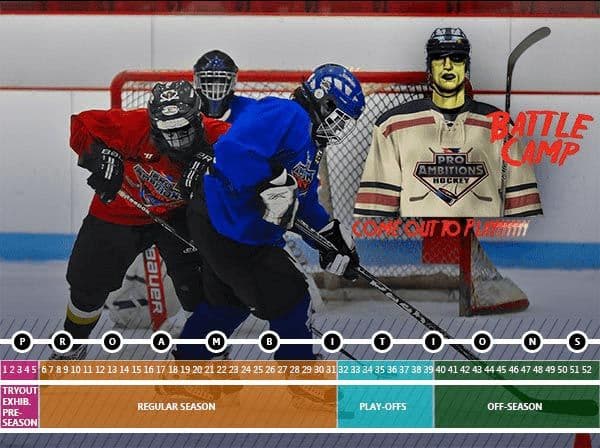
The hockey player's year is divided up into distinct phases called mesocycles when discussing periodized athletic training. The mesocycles for hockey players are pre-season and tryouts, the regular season, playoffs, post-season rest, and summer training. Each phase has a specific purpose, and each one feeds into the next. If you skip a phase or shortchange it, you will feel it down the line.
Think of it like building a house. You cannot put the roof on before the foundation is set. Every mesocycle lays the groundwork for what comes next.
Pre-Season and Tryouts
This is where your summer work gets tested. Your conditioning, your strength, your skating, all of it shows up the moment you step on the ice for camp. Players who trained with a plan during the summer walk into tryouts with confidence. Players who coasted walk in hoping no one notices.
The Competitive Season
The hockey season is long. Longer than any other sport. Peak condition needs to be achieved by the onset of the competitive year and maintained throughout. This is why what you do before the season matters so much. You cannot build fitness during a long season. You can only try to hold onto what you built.
The In-Season Maintenance Phase
In-season training is typically called the maintenance mesocycle, where a reduced frequency of training is necessary. The focus shifts to execution. You are not trying to get stronger or faster in-season. You are trying to stay sharp, stay healthy, and perform. A smart maintenance program keeps your body ready without adding fatigue on top of a full game schedule.
Post-Season Rest
This phase gets overlooked, but it matters. After a long season and playoffs, your body and your mind need a real break. Taking two to four weeks away from structured training is not laziness. It is part of the plan. Players who refuse to rest often start the next summer training cycle already behind because they are carrying fatigue they never let go of.
The Summer Mesocycle: Where Real Growth Happens
Back to the summer hockey growth spurt. Studies have shown that the summer mesocycle in periodized hockey training is the most important mesocycle in achieving peak performance prior to training camp or tryouts. What hockey players do over the summer makes all the difference in how their performance will look in the upcoming season.
I have written about what I call the summer hockey growth spurt. For me personally, summer was the most important mesocycle in my own periodized hockey training. I am reflecting on my prep school through pro hockey career. The players who separated themselves were almost always the ones who treated the summer like a job.
This is the time to train wisely and efficiently with experts. It is not about logging the most hours or doing the hardest workouts you can find. It is about training with a purpose, targeting your weaknesses, building your strengths, and arriving at camp a better player than you were when you left the ice in the spring. That is the whole point.
Frequently Asked Questions
What is periodization training and why does it matter for hockey players?
Periodization training is the planned variation of training volume and intensity throughout the year, broken into phases called mesocycles. For hockey players, it matters because the season is so long and the physical demands are so high. A structured annual plan helps you peak at the right time, avoid burnout, and reduce injury risk. Players who train without a plan often either overtrain or undertrain, and both hurt performance.
How should a hockey player train differently in the summer versus during the season?
Summer is the time to build. You should be increasing your strength, your conditioning, your skating mechanics, and your skills. Volume can be higher, intensity can be pushed, and you have the time to work on your weaknesses without the pressure of a game schedule. During the season, you shift into maintenance mode. The goal is to stay sharp and healthy, not to keep building. Trying to make big fitness gains during a long hockey season usually just leads to fatigue.
When should a hockey player take time completely off?
Right after the season ends. Most players need two to four weeks of genuine rest before starting their summer training cycle. This is not wasted time. Your body repairs, your motivation resets, and you come back to summer training ready to work hard. Players who go straight from the season into intense off-season training without any break tend to plateau faster and get injured more often.
Is summer training really that important for young hockey players?
It is the most important mesocycle in the year. The summer is when real development happens because you have the time and the space to focus. During the season, you are managing a schedule, staying healthy, and competing. The summer is when you actually improve. Young players who treat the summer seriously, training with structure and getting quality coaching, show up to the next season as noticeably better players. That is not an opinion. That is what the research supports, and it is what I watched happen throughout my own career.
Apply It On The Ice
Ready to Put This Into Practice?
Pro Ambitions runs the largest youth hockey camp in North America. Train with coaches who wrote articles like this one.