Late Bloomers and Non Stars, Don’t Count them Out, Sale
Not all hockey stars shine early. Jeff Serowik reveals why late bloomers often outpace early successes, sharing real examples from Pro Ambitions camps where hard work transforms average players into elite athletes.
June 30, 2026
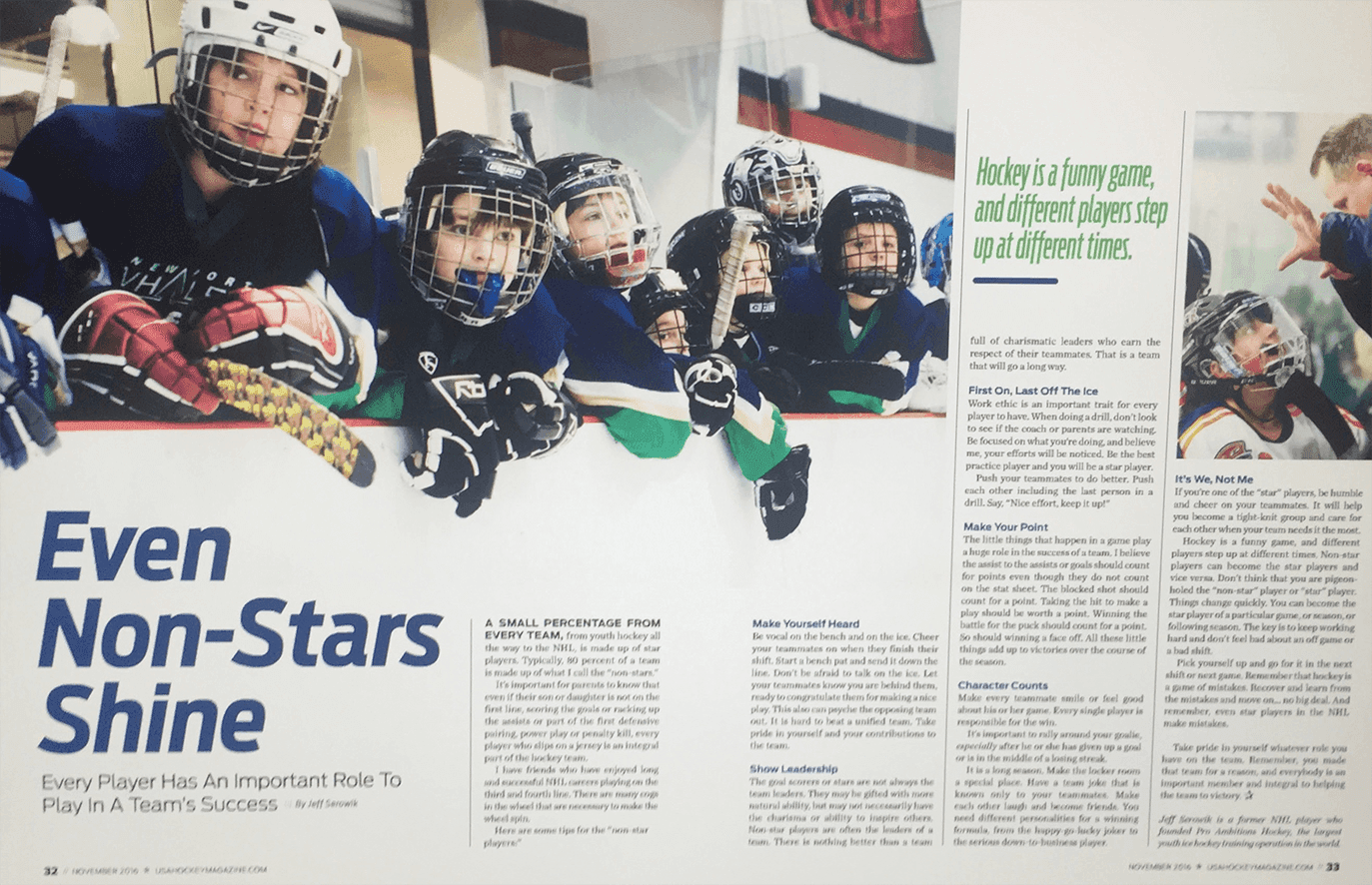
The Non Stars on the Team
The late bloomers. Don't count them out. And on the other hand, the early bloomers, don't always count them in. I myself was a late bloomer. I see it all the time at my camps. Some kids come year after year and BANG, their hard work begins to pay off right in front of our eyes. They hit their stride. With the technologically advanced world we live in today, athletes are training on and off the ice with the power of information, nutrition, apps, and video. The kids who put the time in are the ones that will eventually hit their stride.
Skill development is not a straight line. Some players take longer to connect the dots between training and performance, and that lag time does not mean the ceiling is low. Coaches and parents need to resist the urge to write a kid off based on where he is at thirteen or fourteen years old.
Early Bloomers vs. Late Bloomers
Some players are early bloomers who enjoy early success in hockey because they develop faster, not because they have more raw athletic talent. Some players, if they appear to only be average athletes or lag behind their peers, may be late bloomers whose athletic talent will only become apparent later when they are teenagers. They may ultimately be more gifted hockey players. Again, I train over ten thousand players annually. We see this all the time. I am now seeing it at the college level as well.
The physical maturation gap between a player born in January and a player born in November of the same year can be significant at the youth level. Size and strength at twelve years old can look like talent, but it is often just biology catching up at different speeds. The player getting outmuscled today may be the one doing the outmuscling in three years. Keep that in mind before making any long-term judgments.
The Problem with Early College Commitments
Unfortunately, sometimes players are committed to D1 schools at young ages and then decommitted, which is not fair whatsoever. Colleges and universities are hedging their bets on young players sometimes too early. In my opinion, they should honor that commitment whether or not they change their mind. I am hearing that is not always the case.
This puts families in a very difficult position. A player builds a recruiting relationship for years, shapes his development around a program, and then gets the rug pulled out. The system is not set up to protect the player, so players and parents need to go in with open eyes. Do not treat a verbal commitment as a done deal until everything is signed.
Don't Give Up on the Late Bloomer Who Is Still Waiting
I have also had players' parents call me who are not committed anywhere by the end of the senior year. These late bloomers have been overlooked. With the help of coaches, I encourage parents to keep the faith. Many times the right people advocating on behalf of your player will be the difference maker. He or she has already done their job for many years.
Exposure matters, but so does having the right voices in your corner. A coach or trainer who has relationships and credibility in the hockey world can open doors that a highlight video alone never will. If your player has put the work in, do not stop pushing on his behalf. The right opportunity does not always come on the recruiting calendar's schedule.
My Own Story
When I made the Penguins, I was in my tenth year pro, first time in my life invited to camp without a contract. I was forced to first attend the rookie camp with eighteen-year-olds. Talk about humble pie. Sports are very humbling for all of us. Hard work does pay off. We are here to help. We are the experts. We have unbiased eyes training your player.
Ten years is a long time to keep going. There were plenty of moments where the easier path would have been to walk away. But I kept working, kept believing the process would pay off, and it did. That experience is exactly why I refuse to write off any player who is still grinding. You do not know when the breakthrough is coming. You just have to be ready when it does.
Frequently Asked Questions
How do I know if my child is a late bloomer in hockey?
Late bloomers often show strong skating mechanics, good hockey sense, and genuine coachability, but they lag behind physically or in confidence compared to their peers. If your player is willing to work and keeps improving over multiple seasons, that is a sign worth paying attention to. Development rarely moves in a straight line, and a player who is average at thirteen can look completely different at sixteen or seventeen.
Should I be worried if my son or daughter isn't getting recruited by the end of junior year?
No, not necessarily. Some of the best stories I have seen have started with a phone call from a panicked parent in the spring of senior year. Timing is not everything. Having the right advocates, staying visible in the right circles, and continuing to improve your game are what actually move the needle. Keep working and keep making calls.
Is it worth committing to a D1 program at a young age?
It can be, but go in with a clear understanding that verbal commitments are not always binding on the college's end. Do your homework on the program, the coaching staff, and their track record with recruits. A commitment should feel like the right fit, not just the best offer on the table at a young age.
Can a player still develop significantly after high school?
Absolutely. Junior hockey, prep school, and early college years are where a lot of late bloomers finally put it all together. The physical maturation, the added training time, and the higher level of competition can accelerate development in ways that youth hockey simply cannot. Do not let a slow high school career be the final word on a player's potential.
Apply It On The Ice
Ready to Put This Into Practice?
Pro Ambitions runs the largest youth hockey camp in North America. Train with coaches who wrote articles like this one.