Intensity with Intelligence in Youth Hockey Development
Fatigue isn't training. Pro Ambitions balances intense skill development with intelligent coaching to build elite youth hockey players who master fundamentals and apply them in game situations.
June 30, 2026
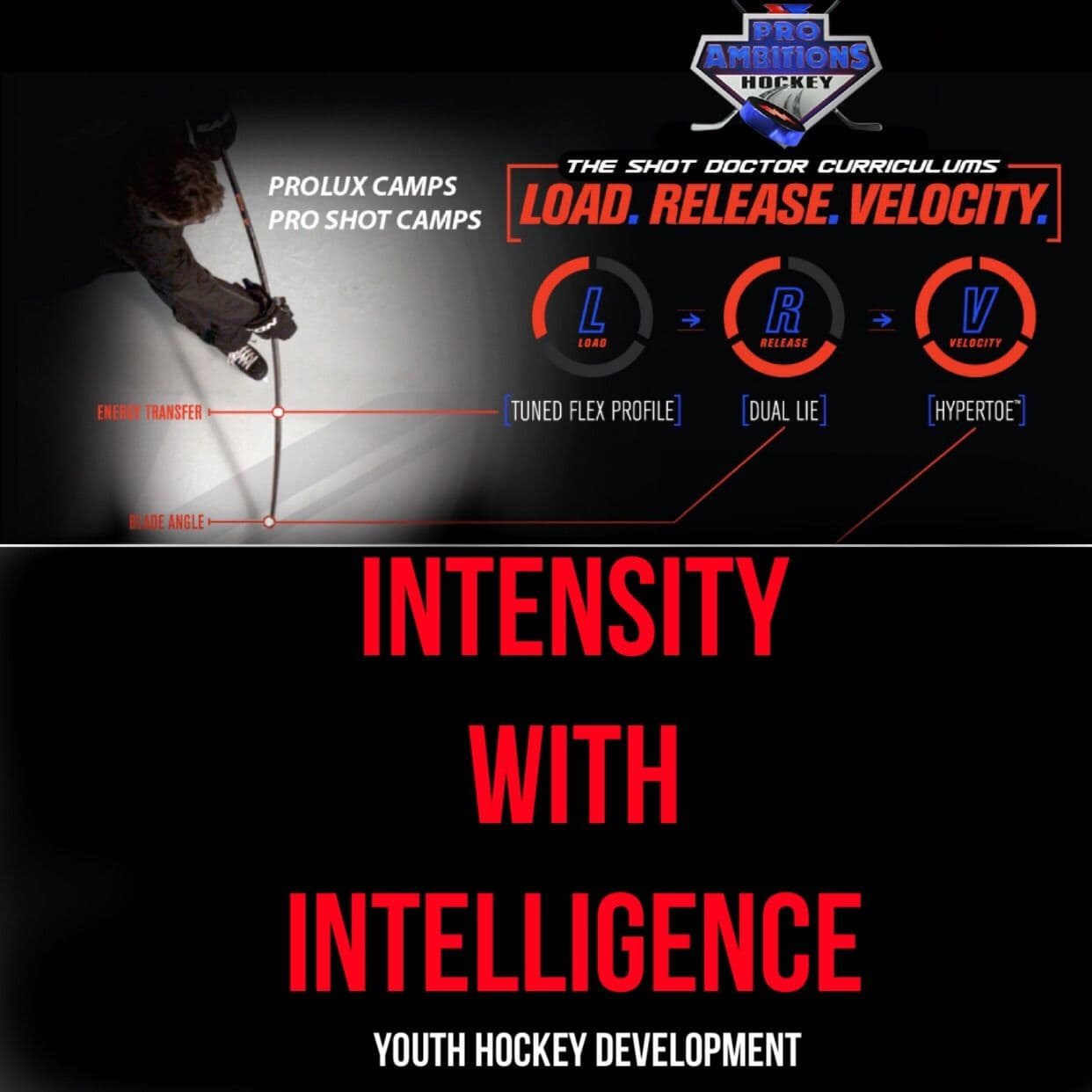
The Problem with Fatigue-Based Training
Today's culture in sports has become addicted to fatigue. Don't be fooled into thinking fatigue is the key to training. Unfortunately, many youth programs are completely misguided in this approach. Anyone can tire out kids. Training them correctly and effectively is a different story altogether.
The coaches who make a real difference understand that exhaustion is not progress. If a player is so worn down they can't execute a proper edge or a clean pass, they're reinforcing bad habits, not building good ones. Fatigue-based training looks impressive to parents watching from the stands, but it doesn't translate to development on the ice.
What the Research Actually Tells Us
It is a fact that children are able to resist fatigue better than adults while also recovering quicker. Kids have lower muscle mass than adults, meaning they generate lower absolute power during high-intensity sport training. That matters when you're designing a program. You can push young players, but you have to push them in the right direction.
This is why the balance of intelligent training with intensity is what you want to find in youth development. One without the other doesn't work. Pure intensity with no plan creates chaos. Pure structure with no competition creates players who can't perform under pressure. The sweet spot is somewhere in the middle, and finding coaches who understand that difference is critical.
Skill Progression Is Not Optional
There is a progression in hockey skill development, and that is what you want to find in experts who can properly articulate the fundamental skills in youth hockey. There is a right way to learn the progression of skill development and a wrong way. It is important to research camps to make sure they are accredited and have a professional curriculum with expert coaching.
Hockey is really two sports in one. You're developing a skater and a hockey player at the same time. A proper training program is a difference maker in any sport, but especially in hockey because of the difficulty and precision required in the skating aspect of the game. The foundation has to be built correctly from the start. If a young player learns to skate with poor mechanics, those mechanics become harder and harder to correct as they get older and faster.
How a Real Development Week Is Structured
Hockey training requires a lot of thought, planning, and expertise. The foundation and skill development must be trained intelligently and intensely, the perfect balance.
Throughout the week at hockey camp, players develop speed, power, and technique on the skill work. Then we apply those skills to game-situational battles. After the initial battle is won or lost, players immediately go in for a second battle with a second puck. Touches, no standing around, planned station work. Every rep has a purpose.
This building block battle drill curriculum peaks at the end of the week when parents are invited to watch on Fridays, both a scrimmage and a skill session. The whole week is designed to build toward that moment. Players aren't performing for parents on day one. They're working through a process.
We want all players to lose their battles at the beginning of the week, getting them winning them by the end. We move them up as they improve, pushing them out of their comfort zones to compete against higher-level players. That is where real growth happens. Comfort is the enemy of development. When a player gets comfortable, they stop improving.
What to Look for in a Youth Hockey Program
We use unbiased eyes. We believe in positive reinforcement only and do not want any campers to be nervous about attending camp. But positive reinforcement is not the same as false praise. We tell players the truth about what they need to work on. We just deliver it in a way that builds confidence rather than tearing it down.
When you're evaluating a program, look for structure, qualified coaching, and a curriculum that progresses logically from session to session. Ask questions. Find out what a typical day looks like. If the answer is vague, that's a red flag. Any program worth its reputation should be able to walk you through exactly how they develop players and why.
→ View All Pro Ambitions Camps & Programs
Frequently Asked Questions
Is intense training actually safe for young hockey players?
Yes, when it's done correctly. The key word is intelligent. Young players have a real capacity to handle high-intensity work, and they recover faster than adults. The danger is not intensity itself. The danger is intensity without structure, poor mechanics trained at high speed, or volume that piles up without purpose. A well-designed program accounts for all of that.
How do I know if a youth hockey camp has a legitimate curriculum?
Look for camps that are accredited and can clearly explain their coaching philosophy and skill progression. If a camp can't tell you how the first day connects to the last day, that's a problem. You want expert coaches who understand both the skating development side and the hockey side. Ask about coach credentials and ask to see a sample schedule before you commit.
What age should a player start attending development camps?
The earlier players start learning correct fundamentals, the better. Bad habits formed young are hard to undo later. That said, the right camp needs to match the right age group with the right curriculum. Not every camp is built for every age. Make sure the program you choose is designed specifically for your player's age and skill level, not just lumped in with a wide range of kids.
What does a good player development progression actually look like during a camp week?
It should build on itself every single day. Early in the week, players are learning and often failing in drills and battle situations. That is by design. By the end of the week, they should be winning more of those battles and doing it with better technique than when they arrived. If your player comes home from camp looking exactly the same as when they left, something went wrong with the program.
Apply It On The Ice
Ready to Put This Into Practice?
Pro Ambitions runs the largest youth hockey camp in North America. Train with coaches who wrote articles like this one.